NRI Guide to Investing in Yamuna Expressway Real Estate 2026

 Facebook
 LinkedIn
 WhatsApp
 X
X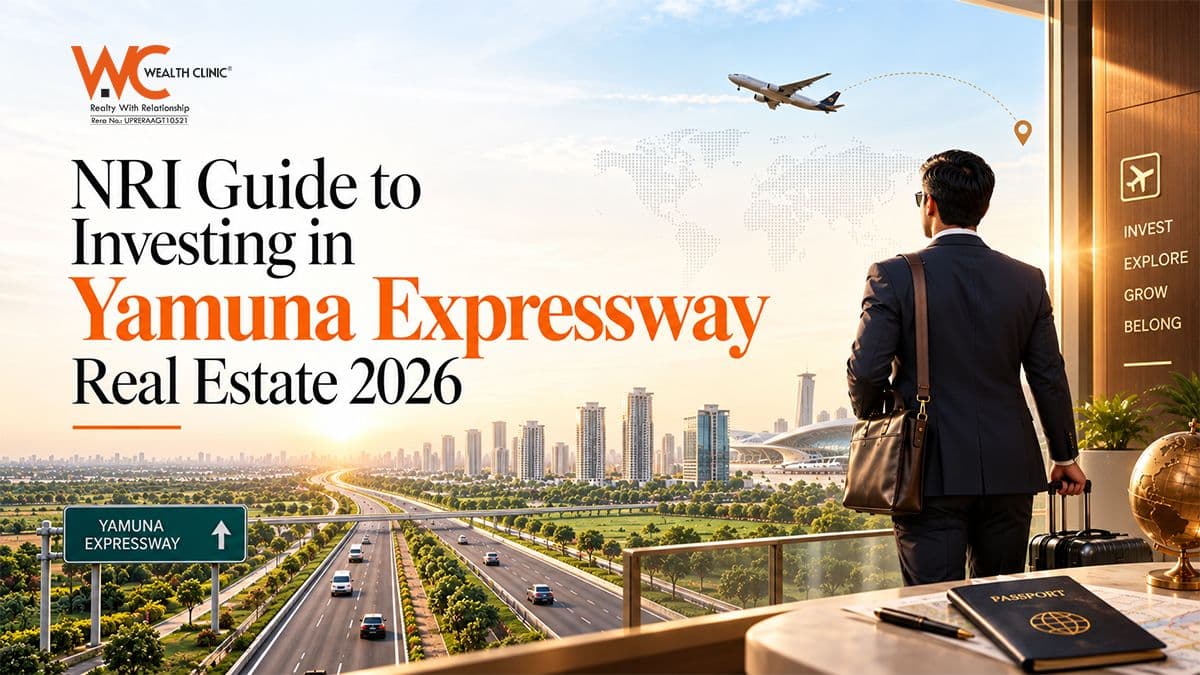
For NRIs looking to invest in Indian real estate in 2026, Yamuna Expressway is emerging as one of the most closely watched investment corridors in the Delhi-NCR region.
The combination of the Noida International Airport, planned transport infrastructure, industrial parks, commercial development and YEIDA Master Plan 2041 is creating a broader economic ecosystem around the corridor.
The Yamuna Expressway itself stretches approximately 165 km and connects major destinations including Greater Noida, Jewar, Vrindavan, Mathura and Agra. It also connects with major routes such as the Noida–Greater Noida Expressway and Eastern Peripheral Expressway.
For an NRI, however, investing in Yamuna Expressway real estate is not simply about buying a property in an upcoming location. It requires understanding location, connectivity, property type, documentation, RERA compliance, taxation, rental potential and the development timeline.
This guide explains what NRIs should know before investing in Yamuna Expressway property in 2026.
Explore Properties in Yamuna Expressway | Book a Free Consultation
Why Are NRIs Looking at Yamuna Expressway Real Estate in 2026?
The investment story of Yamuna Expressway has changed significantly with the development of large-scale infrastructure around Jewar and the YEIDA region.
The biggest catalyst is the Noida International Airport, which was inaugurated on 28 March 2026 according to the project presentation. Phase 1 is planned for a passenger capacity of approximately 12 million passengers annually, while the overall airport site covers around 7,200 acres.
The airport is also being supported by logistics infrastructure. The presentation states that the Multi-Modal Cargo Hub began cargo operations in June 2026, with an initial annual capacity of 2.5 lakh metric tonnes and the potential to scale significantly as the facility expands.
For real estate investors, this matters because airports do not operate in isolation. They can support demand for housing, offices, retail, hospitality, logistics and other businesses around the wider economic zone.
1. Noida International Airport Is a Major Growth Driver
The development of Noida International Airport is one of the most important factors behind growing interest in Yamuna Expressway property investment.
The airport is expected to support several sectors, including:
- Aviation
- Logistics
- Tourism and hospitality
- IT and technology
- Manufacturing
- MSMEs
- Media and entertainment
- Healthcare and medical technology
The presentation projects more than 12,000 direct jobs in the early stages of operations, 50,000+ within five years and more than one lakh direct and indirect jobs in the longer term. These figures are projections presented in the source material rather than guaranteed outcomes.
For NRIs, the larger point is that employment generation and business activity can influence future housing and commercial demand.
2. Yamuna Expressway Is Developing Beyond Residential Real Estate
One reason NRIs should consider the corridor differently in 2026 is its expanding industrial ecosystem.
YEIDA has planned or developed multiple sector-specific zones, including:
- Electronics Manufacturing Cluster
- Semiconductor Park
- Medical Device Park
- EV Park
- Data Centre Park
- Apparel Park
- Toy Park
- Furniture Manufacturing Park
- Logistics Park
- Metro Coach Factory
- Food and Herbal Park
The presentation identifies multiple industrial sectors across YEIDA, making the region more than a conventional residential property market.
This diversification can be important for long-term real estate demand because residential development can benefit from the presence of employment centres, while commercial properties can benefit from growing business activity.
Explore Properties in Yamuna Expressway | Book a Free Consultation
3. Japanese, Korean, Taiwanese and Singaporean Investment Ecosystems
Another development NRIs should watch is the planned international business ecosystem within YEIDA.
The proposed Korean City is in Sector 4A, Japanese City in Sector 5A, Taiwan City in Sector 6 and Singapore City in Sector 7.
The Japanese City is planned as a multi-purpose industrial zone with a strong focus on electronics, semiconductors, AI equipment and related manufacturing. The Korean City is planned as a mixed-use ecosystem with housing and supporting facilities for the Korean workforce. For property investors, these developments are worth monitoring because international industrial investment can create demand for housing, commercial spaces and supporting services.
However, NRIs should distinguish between planned, under-development and operational projects before making an investment decision.
4. Connectivity Is One of the Biggest Advantages
Connectivity is a major factor when evaluating any real estate investment.
Yamuna Expressway already connects the wider region with major cities and transport corridors, including Greater Noida, Jewar, Vrindavan, Mathura and Agra. It also links with the Noida, Greater Noida Expressway and Eastern Peripheral Expressway.
Future transport plans could further strengthen accessibility.
The presentation highlights a confirmed 71.1-km RRTS route from Ghaziabad towards Jewar, passing through areas including Kasna/Ecotech VI, YEIDA City and Noida International Airport. It also mentions a proposed IGI Airport–Noida Airport RRTS connection at the feasibility stage and the planned Delhi–Varanasi High-Speed Rail corridor.
For NRIs who cannot visit India frequently, strong connectivity is especially important because it can improve the property's accessibility for future users, tenants and buyers.
5. What Type of Property Should an NRI Buy?
There is no single property type that is right for every NRI. The choice should depend on the investment objective.
Residential Property
Residential apartments and plots may appeal to NRIs looking for long-term exposure to the region.
Before purchasing, evaluate:
- Distance from the airport
- Access to major roads
- Developer track record
- RERA registration
- Construction status
- Maintenance costs
- Nearby schools and healthcare
- Existing residential occupancy
A property close to planned infrastructure is not automatically a better investment. The surrounding development and actual accessibility also matter.
Commercial Property
Commercial real estate can be considered by NRIs seeking potential rental income or business-use opportunities.
The wider YEIDA region is developing commercial and industrial ecosystems alongside the airport and logistics infrastructure. The presentation specifically identifies commercial growth as part of the airport-led development story.
For commercial properties, pay particular attention to:
- Footfall
- Tenant demand
- Location within the commercial development
- Lease terms
- Maintenance charges
- Vacancy risk
- Developer and project approvals
Plots and Land
Plots can be attractive to investors seeking long-term land exposure, but they require additional due diligence.
An NRI should verify:
- Ownership and title
- Land-use classification
- Development authority approvals
- RERA applicability, where relevant
- Encumbrances
- Registry documentation
- Access road
- Development status
- Seller credentials
Never buy land simply because it is being marketed as “near the airport”.
6. Which Areas Should NRIs Track?
Instead of focusing on one locality, NRIs can monitor different development zones across the Yamuna Expressway corridor.
Jewar and Airport Influence Zone
The airport makes the Jewar area particularly important for investors tracking aviation, logistics and hospitality-led development.
YEIDA Sectors
Different YEIDA sectors are being developed for different purposes. For example, the presentation identifies industrial activity across sectors such as 10, 24, 28, 29, 32 and 33.
Sector 21
The International Film City is planned in Sector 21, with the presentation identifying a total area of approximately 1,000 acres and Phase 1 covering about 230 acres. It is positioned around film studios, OTT production, media facilities, a theme park and related infrastructure.
Industrial and Employment Zones
Sectors with manufacturing, technology, healthcare and logistics activity may become increasingly relevant for residential and commercial property demand as these ecosystems develop.
7. What NRIs Must Check Before Buying Property in Yamuna Expressway
Buying property remotely requires additional caution.
Check RERA Registration
For applicable projects, verify the project's registration details on the relevant RERA authority website before making a payment.
Do not rely only on brochures, WhatsApp messages or verbal commitments from sales representatives.
Verify the Developer
Research:
- Previous projects
- Delivery record
- Litigation history
- RERA records
- Financial credibility
- Construction progress
Verify the Property Documents
Depending on the property type, documents may include:
- Sale agreement
- Title documents
- Allotment letter
- Sale deed
- Possession documents
- Approved building plans
- Encumbrance details
- RERA documentation
A qualified property lawyer should independently verify the documents.
Understand the Payment Schedule
NRIs should clearly understand:
- Booking amount
- Construction-linked payments
- Registration charges
- Stamp duty
- Maintenance charges
- Parking charges
- Other applicable costs
Do not calculate the investment only on the advertised property price.
8. Can NRIs Buy Property in Yamuna Expressway?
NRIs can generally purchase residential and commercial immovable property in India subject to applicable Indian laws and regulations.
However, rules can differ depending on the investor's residential status, property type and source of funds.
Before transferring money, an NRI should consult a qualified Indian property lawyer, chartered accountant or authorised financial professional regarding FEMA, taxation, remittance and documentation requirements.
For an NRI, getting the legal and financial structure right is just as important as selecting the property.
9. How Should NRIs Finance Their Investment?
An NRI may consider purchasing property through:
Self-funding: Using funds available through permitted banking channels.
NRI home loan: Eligible NRIs can explore home-loan options from Indian financial institutions, subject to lender requirements.
Joint investment: Some NRIs invest jointly with family members in India, but ownership, taxation and succession implications should be understood before proceeding.
The important point is to compare the total cost of borrowing with the expected cash flow from the property rather than assuming that leverage will automatically improve returns.
10. Tax Considerations for NRIs
Taxation is an important part of any NRI real estate investment in India.
Depending on the transaction and holding period, an NRI may need to consider:
- Tax deducted at source on property transactions
- Rental income taxation
- Capital gains taxation
- Stamp duty
- Registration charges
- Tax implications when selling the property
- Applicable tax treaty considerations
Tax rules can change and depend on individual circumstances. NRIs should therefore obtain current advice from a qualified tax professional before buying or selling property.
11. Is Yamuna Expressway Real Estate a Good Investment for NRIs in 2026?
Yamuna Expressway has several characteristics that make it worth researching in 2026:
Airport: Noida International Airport has moved from a future infrastructure proposal to an operational development phase.
Industrialisation: Multiple industrial parks and manufacturing clusters are being developed across YEIDA.
Employment: The corridor is expected to generate employment across aviation, manufacturing, logistics, technology and other sectors.
Connectivity: Planned RRTS and high-speed rail connections could further improve regional accessibility.
Long-term planning: YEIDA Master Plan 2041 provides a longer-term framework for urbanisation and infrastructure development.
But these factors should be treated as investment considerations, not guarantees of appreciation or returns.
12. Common Mistakes NRIs Should Avoid
Buying only because of the airport
Airport proximity alone does not make a property a good investment.
Trusting guaranteed-return claims
No property investment should be evaluated solely on promised returns.
Ignoring project status
Always distinguish between an operational project, an under-construction project and a proposed development.
Skipping legal verification
Remote buying makes independent legal due diligence even more important.
Choosing the cheapest property
The lowest price may not offer the best location, connectivity, construction quality or resale potential.
Not planning the exit
Before buying, ask yourself:
Who is likel to buy this property from me in five or ten years?
A clear exit strategy can help an NRI avoid becoming dependent on a single future development assumption.
NRI Investment Checklist for Yamuna Expressway
Before finalising a property, use this checklist:
- Verify RERA registration, where applicable
- Check developer background
- Conduct independent legal due diligence
- Verify title and ownership documents
- Understand the exact location and access roads
- Check actual construction/development status
- Compare nearby projects
- Calculate the complete acquisition cost
- Understand taxation and TDS requirements
- Check home-loan eligibility if financing
- Evaluate rental and resale demand
- Understand maintenance and other recurring costs
- Appoint a trusted representative if purchasing remotely
- Keep all agreements and payment records safely
Conclusion
For NRIs, Yamuna Expressway real estate in 2026 represents a development corridor rather than simply another property market.
The combination of the Noida International Airport, industrial parks, logistics infrastructure, proposed international business ecosystems, connectivity projects and YEIDA Master Plan 2041 is creating a broader economic landscape around the corridor.
The presentation itself describes Yamuna Expressway as a fast-growing investment corridor and highlights the airport, industrial ecosystem and long-term infrastructure development as key components of the region's growth story.
However, the right approach for an NRI is not to invest because a location is trending. It is to identify a legally sound property in the right micro-market, from a credible developer, at a sensible valuation, with a clear investment objective and exit plan.
For NRIs considering property in Yamuna Expressway, professional legal, tax and real estate advice should be taken before making a final investment decision.
Frequently Asked Questions

Disclaimer
Wealth Clinic is a real estate consulting and marketing company offering property advisory services to homebuyers and investors. Project details, pricing, layouts, specifications, and availability are provided by respective developers or publicly available sources and may change without notice. Wealth Clinic does not own or develop the listed projects and acts solely as a consulting partner. All bookings and agreements are between the buyer and the respective developer. Buyers are advised to verify project details, RERA registration, pricing, approvals, and legal documents with the developer before making any purchase or investment decision.