
 Facebook
 LinkedIn
 WhatsApp
 X
X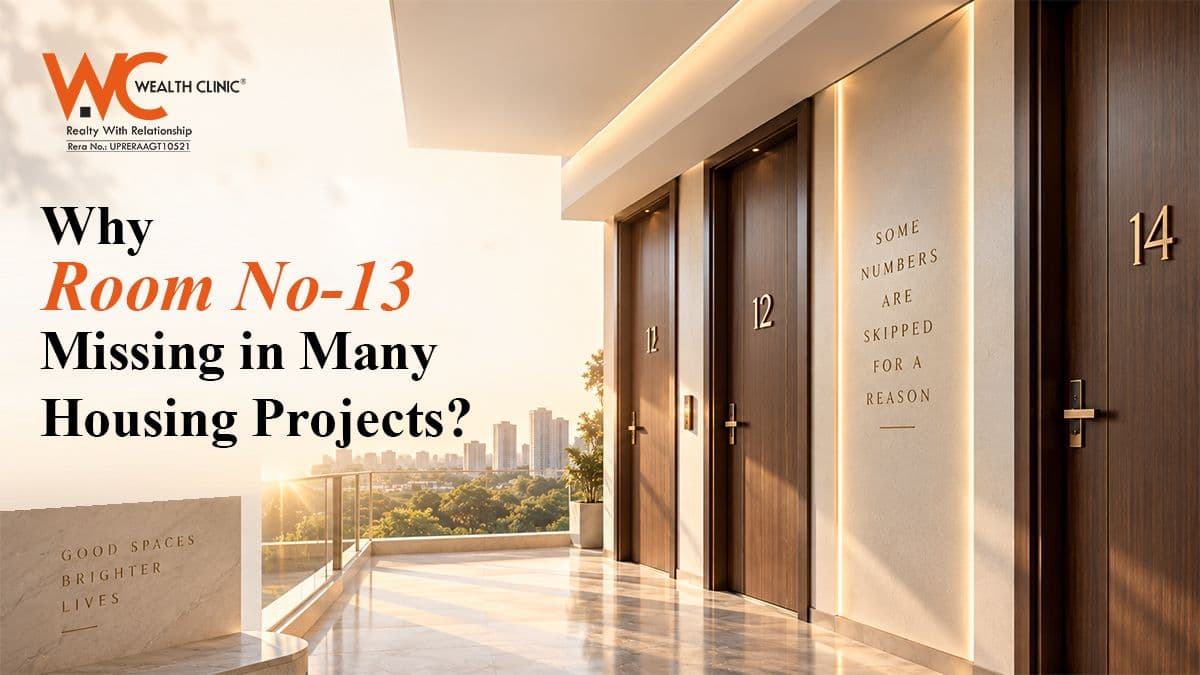
Have you ever entered a residential tower, hotel or office building and noticed something strange in the lift? The floor numbers may go from 12 directly to 14, with no 13 in between. You may also find apartment numbers such as 1201, 1202, 1401 and 1402, while 1301 and 1302 appear to be missing.
So, where did Room No. 13 or the 13th floor go?
In most cases, it has not disappeared. The floor or rooms physically exist but have been given a different number. Developers may use 12A, M, 12B or 14 instead of 13 because the number is considered unlucky by some buyers. The practice is mainly linked to superstition and market psychology, rather than any structural or engineering issue. However, a recent 2026 MahaRERA case has also highlighted an important point for homebuyers: developers cannot simply change floor numbering after sanctioned building plans have been approved.
Want to invest in a premium property with the right Vastu? Explore top luxury residential projects
Why Is Number 13 Skipped?
The biggest reason is buyer psychology and superstition, rather than any engineering requirement. The fear or strong dislike of the number 13 is known as triskaidekaphobia. In several cultures, 13 is associated with bad luck. Because some buyers may hesitate to purchase or rent a property carrying the number 13, developers sometimes choose alternative numbering.
For example, instead of:
12 → 13 → 14
you may see:
12 → 12A → 14
or sometimes:
12 → 14 → 15
The building itself does not necessarily have a missing floor. In many cases, it is simply the number that has been changed or skipped.
Is Flat No. 13 Considered Bad in Vastu?
This is where Vastu and superstition need to be separated. There is no universal Vastu rule that says a property with the number 13 is automatically bad or inauspicious. Traditional Vastu assessment generally focuses on factors such as:
- Main entrance direction
- Property orientation
- Overall floor plan
- Kitchen placement
- Bedroom placement
- Toilet and bathroom locations
- Northeast and other directional zones
- Natural light and ventilation
Therefore, simply having a property associated with the number 13 does not automatically make it Vastu-defective. The avoidance of 13 in many buildings is more closely connected with cultural beliefs, numerology and buyer preferences.
Why Do Builders Use 12A Instead of 13?
For developers, avoiding 13 can be a practical marketing decision. Real estate is a high-value purchase, and buyers can have strong emotional preferences. If some potential buyers are uncomfortable with the number 13, a developer may use 12A instead to remove that hesitation.
This practice has existed in Indian real estate for years. Industry reports have documented projects where developers used 12A or other alternatives because customers were reluctant to buy properties numbered 13.
So when you see:
12 → 12A → 14
it does not necessarily mean that anything is wrong with the building.
Does the 13th Floor Actually Exist?
In many cases, yes.
The floor that would traditionally be counted as the 13th floor may physically exist, but its displayed number can be changed.
For example:
However, numbering practices can differ between projects. Therefore, buyers should always check the approved plans and official project documents rather than assuming what a floor number means.
Investing in a premium home? Explore luxury residential projects with Vastu-friendly layouts
Is It Legal to Change the Floor Number?
This is an important point for homebuyers. In July 2026, reporting on a MahaRERA matter highlighted that developers cannot simply change floor or flat numbering after the building plans have been sanctioned. If the numbering in the actual building differs from approved plans, it can potentially create problems with property records, registration, taxation or future resale.
This means buyers should not focus only on whether the project displays 13 or 12A.
Instead, check whether the floor and flat numbers match the sanctioned plans and relevant sale documents.
Should You Avoid a Flat on the 13th Floor?
Not necessarily.
There is no structural or engineering reason that makes a floor unsafe simply because it is associated with the number 13. The important factors remain:
- Construction quality
- Fire and safety compliance
- Location
- Floor plan
- Natural light and ventilation
- Developer reputation
- Price
- Connectivity
- Legal approvals
- RERA details
- Resale and rental potential
If you personally believe in numerology or prefer to avoid 13, that is a personal choice. But from a property-buying perspective, the number alone should not determine whether a property is good or bad.
Could a 12A Flat Affect Resale?
It depends on the market and buyer preferences.
Some buyers may specifically avoid properties associated with 13, while others may not care at all. A property labelled 12A could therefore appeal to buyers who prefer avoiding 13. On the other hand, if the underlying physical floor is the same, factors such as location, view, floor height, layout, price and amenities are likely to have a much greater influence on the property's actual value.
What Should Homebuyers Check?
If you are buying a flat where the numbering goes from 12 to 12A and then 14, don't worry about the number first. Instead, ask the developer:
- Does the physical floor sequence include the floor shown as 12A?
- How is the floor numbered in the sanctioned plan?
- What floor number appears in the sale agreement?
- Does the RERA information match?
- Are the flat number and floor number consistent across relevant documents?
This simple verification can help you avoid confusion later.
Vastu or Superstition: What's the Real Reason?
The simple answer is:
Skipping 13 is generally driven by superstition and market psychology, not by a universal Vastu rule. Developers may use 12A, 12B or 14 because some buyers are uncomfortable with 13. So, if you see a project where the sequence is 12 → 12A → 14, don't assume that the 13th floor has disappeared or that there is a Vastu problem.
Look at the property's actual layout, documents and fundamentals.
Conclusion
The missing number 13 in many housing projects is more about buyer perception than construction or Vastu. Developers may avoid displaying 13 and use 12A or 14 instead because some buyers associate the number with bad luck. However, this does not automatically make the property unsuitable. For homebuyers, the more important question is whether the floor numbering is consistent with the approved plans and property documents. And if Vastu matters to you, evaluate the complete property layout, direction and room placement instead of judging a home only by its number.
Frequently Asked Questions

Disclaimer
Wealth Clinic is a real estate consulting and marketing company offering property advisory services to homebuyers and investors. Project details, pricing, layouts, specifications, and availability are provided by respective developers or publicly available sources and may change without notice. Wealth Clinic does not own or develop the listed projects and acts solely as a consulting partner. All bookings and agreements are between the buyer and the respective developer. Buyers are advised to verify project details, RERA registration, pricing, approvals, and legal documents with the developer before making any purchase or investment decision.