
 Facebook
 LinkedIn
 WhatsApp
 X
X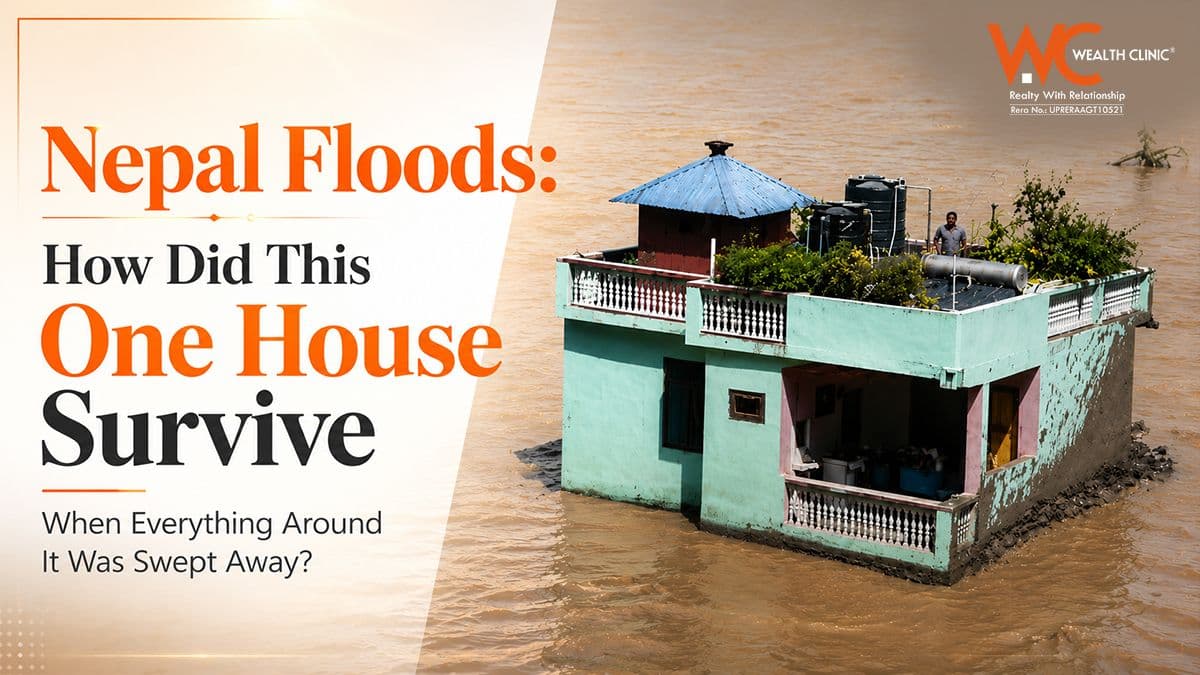
When photos & videos of the Nepal floods began circulating online, one particular image stood out. In the middle of a landscape covered with mud, broken structures and floodwater, a bright green house was still standing.
It looked almost unreal.
The powerful floods had transformed parts of the Trishuli River region, carrying away vehicles, homes and other structures. Yet this house appeared to have survived the worst of it, quickly turning into one of the most talked-about images from the disaster.
For the family living inside, however, there was nothing extraordinary or viral about that moment. They were simply trying to survive.
Explore Wealth Clinic – Your Trusted Real Estate Consultant in India
The House That Suddenly Became the Centre of Attention
The house is located in Nepal's Nuwakot district and is believed to be around four decades old. It was an ordinary family home before the floods. Within hours, it became a symbol of survival.
As floodwater rose around the property, the family moved towards the upper floors to stay above the water. The situation became increasingly dangerous as debris and water surrounded the building.
Eventually, rescuers managed to bring the family to safety. When the waters began to recede, the house was still there.
Its lower portion had suffered damage, and vehicles and belongings were lost, but the main structure had survived the disaster.
That immediately raised a fascinating question: why this house?
Sometimes, the Story Begins Before the Disaster
A building's performance during an extreme event is rarely determined on the day the disaster happens.
Much of it depends on decisions made years earlier.
Where was the building constructed? How was the foundation prepared? What materials were used? How was the structural frame designed? What was the surrounding terrain like?
These questions become especially important when a property is built near a river or in an area exposed to extreme weather.
According to reports about the house, its owner had paid particular attention to the foundation because of the property's location near the river. That decision may have contributed to the building's stability, although it would require detailed engineering analysis to establish exactly why the house survived.
Explore Wealth Clinic – Your Trusted Real Estate Consultant in India
Water Can Destroy More Than What You See
Flood damage isn't limited to water entering a building. One of the biggest dangers comes from what the water carries with it.
During a severe flood, the flow can transport rocks, trees, vehicles, mud and fragments of damaged structures. When these objects hit buildings, they can create enormous impact forces.
At the same time, moving water can remove soil around foundations. A structure may appear perfectly stable from the outside while the ground supporting it is gradually being weakened underneath. This is why foundation design and ground conditions matter so much in areas exposed to flooding.
The Ground Beneath a Property Matters
For most homebuyers, the first visit to a property is about what they can see.
They look at the living room, bedrooms, kitchen, balcony, clubhouse and surroundings. They check how close the property is to offices, schools, highways and shopping areas. Very few people think about what is happening several feet below the building.
But the land beneath a property is its starting point.
Soil conditions influence the way a building is supported. Drainage influences where rainwater goes. The natural slope of the land can influence how water moves during heavy rainfall. The Nepal house brings this less-visible side of real estate into focus.
Explore Wealth Clinic – Your Trusted Real Estate Consultant in India
Why One Building Can Survive While Another Doesn't
It is tempting to compare the green house with the buildings around it and assume that it must simply have been "stronger."
The reality can be much more complicated. A difference of only a few metres can change how directly floodwater hits a building. One structure may stand in the main path of moving debris while another is partially shielded by terrain or surrounding features.
Construction methods can also vary significantly from one building to another.
Foundation depth, structural connections, materials, maintenance and the condition of the surrounding ground can all influence how a property behaves during an extreme event.
So the survival of one building should not automatically be treated as proof that one particular construction technique is superior.
Could the House Have Been Saved by Its Position?
Possibly, the position of a property relative to the river and the flow of water can be extremely important during flooding.
Water doesn't spread with equal force everywhere. Some areas receive the direct force of the current, while others may experience comparatively less pressure. Terrain can also change the direction and speed of water. This is why flood-risk assessment is increasingly becoming an important part of understanding a property's location, particularly in areas close to rivers, low-lying land or natural drainage channels.
The Nepal house may have benefited from a combination of its structural characteristics and its particular position during the flood.
The Green House Wasn't Invincible
One thing is important to remember when looking at the viral photographs: the house was not untouched. The lower section was affected by the flood, and the family lost belongings and vehicles.
What makes the story remarkable is that the main structure remained standing despite the intensity of the disaster.
That distinction matters, a house surviving one extreme event doesn't mean that it is permanently protected against floods. Natural disasters are unpredictable, and the forces acting on a building can vary dramatically from one event to another.
Calling it "flood-proof" would therefore be an exaggeration.
What This Story Says About Modern Real Estate
The Nepal floods may seem far removed from the Indian property market, but the underlying lesson is surprisingly relevant. India has seen increasing conversations around urban flooding, extreme rainfall, waterlogging and climate-related risks.
For someone buying a home, these factors can become part of the long-term property decision.
A good location isn't only one with excellent connectivity. It should also have appropriate infrastructure, drainage and environmental conditions for the kind of development being built there.
This is particularly relevant when evaluating properties in rapidly developing areas where roads, drains and surrounding infrastructure are still evolving.
What Should You Check Before Buying a Property?
The Nepal incident is a good reminder to look beyond the brochure. Before buying a property, buyers can ask about the area's history of waterlogging and flooding. It is also worth understanding how rainwater is managed within the project and how the surrounding roads and drainage network handle heavy rainfall.
For independent houses and plotted developments, understanding the land and soil conditions becomes even more important.
For high-rise developments, buyers should also pay attention to basement drainage, waterproofing and water-management systems.
These aren't necessarily the most glamorous features of a property, but they can become extremely important when weather conditions become extreme.
A Viral House With a Real Lesson Behind It
The green house became famous because it looked almost impossible. Everything around it seemed to have been erased by the flood, while the house remained standing. But the real story isn't about a mysterious building that somehow defeated nature.
It is a reminder of how many different factors can influence the performance of a property the land, the foundation, structural design, construction quality, drainage, terrain and the path taken by floodwater.
For homebuyers, that's perhaps the most valuable takeaway. A property is much more than its walls, interiors and amenities. Before making a purchase, it is worth understanding the things that aren't immediately visible.
Because when extreme conditions arrive, the hidden qualities of a property can matter far more than the features displayed in its brochure.
Frequently Asked Questions

Disclaimer
Wealth Clinic is a real estate consulting and marketing company offering property advisory services to homebuyers and investors. Project details, pricing, layouts, specifications, and availability are provided by respective developers or publicly available sources and may change without notice. Wealth Clinic does not own or develop the listed projects and acts solely as a consulting partner. All bookings and agreements are between the buyer and the respective developer. Buyers are advised to verify project details, RERA registration, pricing, approvals, and legal documents with the developer before making any purchase or investment decision.