
 Facebook
 LinkedIn
 WhatsApp
 X
X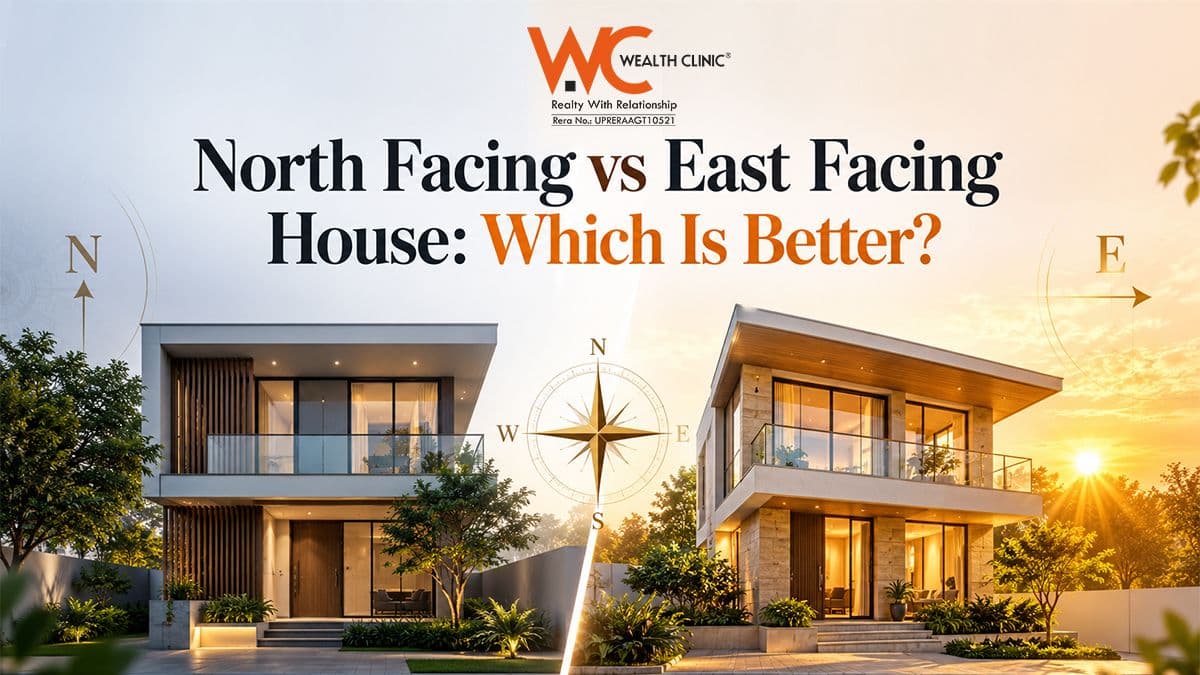
When buying a home in India, one of the most common questions buyers ask is: North facing or East facing, which is better according to Vastu?
Both directions are traditionally considered favourable, but they are associated with different Vastu principles and practical advantages. An East-facing house is often preferred for its connection with the rising sun, while North-facing homes are traditionally associated with prosperity and opportunities.
But there is one important point: the direction alone does not decide whether a property is good or bad. The main entrance, floor plan, room placement, natural light and ventilation also matter.
Is North Facing House Good According to Vastu?
Yes. A North-facing house is traditionally considered favourable in Vastu Shastra.
The North direction is associated with Kubera, traditionally regarded as the deity of wealth and prosperity. Because of this association, many Vastu-conscious homebuyers prefer North-facing properties. From a practical perspective, a North-facing home can also receive relatively softer and more consistent daylight compared with a home receiving strong direct sunlight from the south, depending on the building design and local climate.
However, simply buying a North-facing property does not guarantee positive results. The exact position of the main entrance and internal layout still need to be considered.
Is East Facing House Good According to Vastu?
Yes, East-facing homes are also traditionally considered highly favourable.
The East is associated with the rising sun, and Vastu traditions connect it with vitality, growth and new beginnings. An East-facing house can also have a practical advantage when its design allows good morning sunlight into the home. This can make the entrance and living spaces feel bright and pleasant.
But again, an East-facing label alone is not enough. A poorly positioned entrance or badly planned floor layout can reduce the practical and traditional advantages of the orientation.
North vs East Facing House: Key Difference
Which Main Entrance Is Better: North or East?
Both can be good according to traditional Vastu.
For a North-facing house, buyers should check the exact position of the entrance along the northern wall rather than treating every point on that wall equally.
Similarly, for an East-facing house, the position of the entrance along the eastern wall is important.
This is why two houses with the same facing direction can have very different Vastu assessments. Current Vastu guidance increasingly highlights this distinction between the broad orientation and the exact entrance zone.
North Facing vs East Facing: Which Gets More Sunlight?
This depends on the property's design, location and surrounding buildings.
Generally, an East-facing home receives direct morning sunlight, which can be useful for naturally brightening the entrance and rooms facing East. A North-facing home can receive more indirect or softer daylight, although the actual experience depends on the latitude, season, windows, balcony placement and neighbouring structures.
So, if natural light is important to you, don't choose a property based only on its facing direction. Visit the actual unit and check it at different times of the day.
Which Is Better for a Flat: North or East?
For an apartment, the answer is neither direction is automatically better. A North-facing flat with a poorly positioned entrance, limited ventilation and an awkward floor plan may be less suitable than a well-planned East-facing flat.
Similarly, an East-facing apartment with blocked windows or excessive heat may not provide the practical benefits you expect.
Before booking, compare:
- Main entrance direction
- Exact entrance position
- Kitchen location
- Master bedroom
- Toilets
- Balcony direction
- Natural light
- Cross ventilation
- View and surrounding buildings
- Overall carpet-area efficiency
Vastu Layout for North Facing House
For buyers following traditional Vastu principles, commonly preferred placements include:
- Main entrance: North zone, with exact position considered
- Kitchen: Southeast
- Master bedroom: Southwest
- Pooja room: Northeast
- Living area: North or East can work depending on the plan
- Open/light areas: North and Northeast are traditionally preferred
These are traditional Vastu recommendations and can vary between Vastu systems.
Vastu Layout for East Facing House
For an East-facing home, commonly followed guidelines include:
- Main entrance: East zone, with exact position considered
- Kitchen: Southeast
- Master bedroom: Southwest
- Pooja room: Northeast
- Living room: East or North
- North and East: Traditionally kept relatively open and light
The actual layout should always be evaluated as a whole rather than by following one rule independently.
North Facing vs East Facing: Which Is Better for Investment?
There is no universal rule that a North-facing property will always perform better than an East-facing one, or vice versa.
For real estate investment, factors such as location, price, rental demand, connectivity, developer reputation, construction quality and future infrastructure can have a much greater impact on returns.
Vastu can influence buyer preference in some markets, but it should be treated as one consideration rather than a guarantee of appreciation.
So, Which One Should You Choose?
If both properties are similar in location, price, quality and layout, you can choose based on your personal Vastu preference. Choose a North-facing house if you particularly value its traditional association with wealth and opportunities.
Choose an East-facing house if you prefer the traditional association with the rising sun and morning light. But if you have to choose between:
A well-planned East-facing home
and
A poorly planned North-facing home
The better choice is usually the well-planned property.
What Should You Check Before Buying?
Before finalising either a North- or East-facing property, check:
- Exact direction using a compass
- Main entrance position
- Complete floor plan
- Kitchen placement
- Master bedroom location
- Toilet and bathroom placement
- Natural light and ventilation
- Balcony and open spaces
- Surrounding buildings and obstructions
- RERA and property documentation, where applicable
Final Takeaway
So, North facing vs East facing, which is better?
According to traditional Vastu, both are considered favourable directions, but they have different associations. North is traditionally linked with wealth and opportunities, while East is associated with the rising sun, growth and new beginnings.
For a real estate buyer, however, the best property is not decided by direction alone. A well-designed floor plan, correctly positioned entrance, good ventilation, natural light, suitable location and clear documentation are equally important.
Frequently Asked Questions

Disclaimer
Wealth Clinic is a real estate consulting and marketing company offering property advisory services to homebuyers and investors. Project details, pricing, layouts, specifications, and availability are provided by respective developers or publicly available sources and may change without notice. Wealth Clinic does not own or develop the listed projects and acts solely as a consulting partner. All bookings and agreements are between the buyer and the respective developer. Buyers are advised to verify project details, RERA registration, pricing, approvals, and legal documents with the developer before making any purchase or investment decision.