
 Facebook
 LinkedIn
 WhatsApp
 X
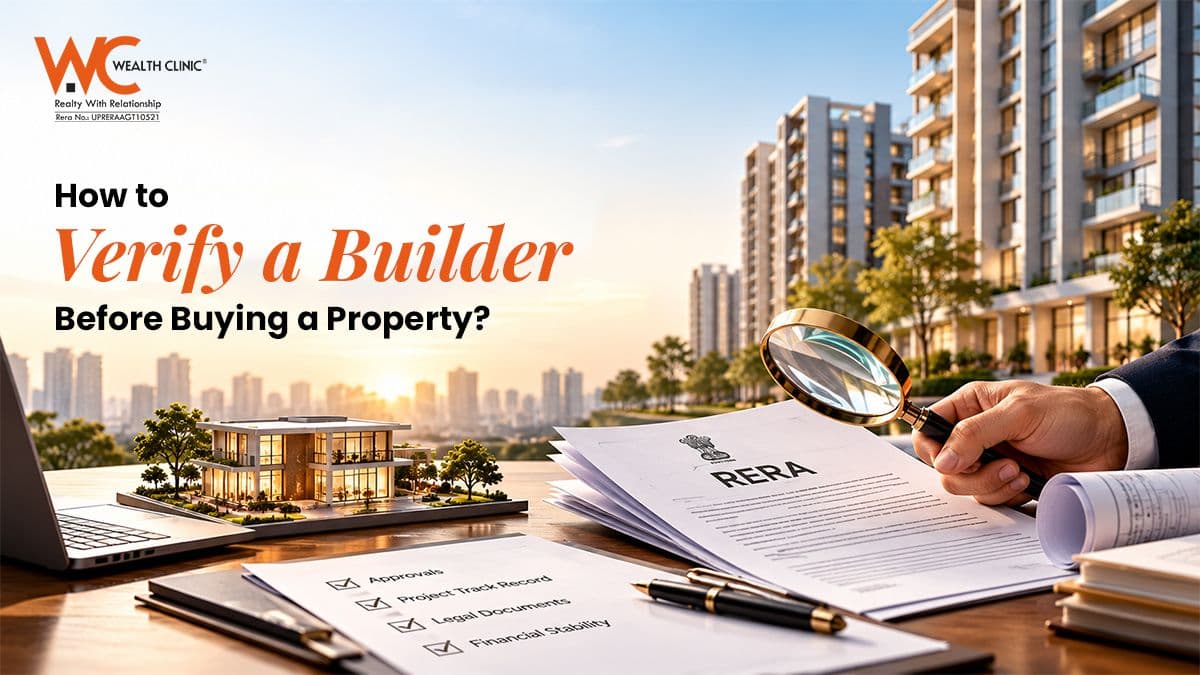
Buying a home is one of the biggest financial decisions for most people. Whether you are planning to purchase a flat, apartment, villa or plot, choosing the right builder is just as important as selecting the location and property type. A builder's reputation, legal compliance, financial stability and construction quality can directly affect your buying experience.
However, many buyers make decisions based on attractive advertisements, sample flats, launch offers or promises of early possession without checking the developer's background. This can lead to problems such as delayed possession, incomplete amenities, legal disputes and unexpected charges.
So, how can you verify a builder before buying a property in India?
The safest approach is to check the builder's RERA registration, previous projects, land title, approvals, construction progress, financial and legal records, and buyer feedback before paying a booking amount.
In this guide, we explain how to verify a builder step by step and which documents you should check before making a property purchase.
Check the Builder's RERA Registration
The first step is to verify the builder and the specific project through the relevant state's Real Estate Regulatory Authority (RERA).
Under Section 3 of the Real Estate (Regulation and Development) Act, 2016, promoters generally cannot advertise, market, book or sell a real estate project covered by the Act without registering it with the appropriate RERA authority. Statutory exemptions may apply to certain projects.
How to check RERA registration
- Visit the official RERA website of the state where the property is located.
- Open the registered projects or project-search section.
- Search using the project name or RERA registration number shown in the advertisement or brochure.
- Verify the promoter's name, project address and registration status.
- Check the declared completion date, approved plans, uploaded documents and available progress updates.
- Review any complaints, regulatory orders, extensions or other status information published by the authority.
Important: Confirm that the registration number belongs to the exact project and phase you intend to buy. A builder may have several projects, and registration of one project does not establish the legal status of all its other developments.
Research the Builder's Track Record
A builder's previous projects can provide useful information about construction quality, delivery timelines, maintenance and customer service.
Before making a decision, research the developer's completed and ongoing projects. Check the following:
- Number and location of completed projects.
- Whether previous projects were delivered within their declared timelines.
- Quality of construction and finishing.
- Availability of promised facilities and amenities.
- Condition of buildings several years after completion.
- Maintenance quality and responsiveness to residents' complaints.
- History of delayed possession, disputes or unresolved customer grievances.
Where possible, visit a completed project developed by the same company. Speak with existing residents or the residents' association about construction defects, water supply, lifts, parking, maintenance costs and the builder's response to complaints.
Do not rely only on testimonials published on the builder's website. Independent feedback and direct conversations with residents can provide a more balanced view.
Verify the Builder's Legal Identity and Company Details
Before paying a booking amount, confirm the legal identity of the company or entity developing the property.
A brand name used in advertisements may differ from the legal name of the company responsible for the project. Check the name of the promoter mentioned in the RERA records and compare it with the booking form, allotment documents and agreement.
For a company or limited liability partnership, you can search the relevant records through the Ministry of Corporate Affairs website.
Check details such as:
- Legal name and registration details of the entity.
- Registered office address.
- Directors or designated partners, where applicable.
- Company status and available statutory filings.
- Whether the entity named in the agreement matches the entity responsible for the project.
Company registration alone does not prove that a builder is financially sound or that a particular property has a clear title. It is one part of the overall verification process.
Check the Land Title and Ownership Documents
A project may have an attractive location and a reputed developer, but buyers should still verify whether the land title and the developer's rights to develop the property are legally sound.
Ask for the relevant land ownership and title documents, and have a qualified property lawyer review them.
Depending on the project, documents may include:
- Title deed or conveyance deed.
- Previous ownership documents showing the title chain.
- Land lease or allotment documents, where applicable.
- Encumbrance information and details of existing mortgages.
- Land-use permissions and applicable development rights.
- Relevant NOCs, consents or authority approvals.
For properties in Noida and Greater Noida, check whether the land is freehold or leasehold and whether the developer has the necessary allotment, lease, development and transfer rights.
An encumbrance certificate or search of registered transactions can help identify certain registered transactions and claims, but it may not reveal every possible dispute or unregistered interest. Therefore, it should not be treated as a complete substitute for a legal title search.
Verify Building Approvals and Project Permissions
Before buying an under-construction property, confirm that the project has the approvals required for its location, design and stage of development.
Depending on the project, these may include:
- Sanctioned building plans.
- Layout approval.
- Land-use or development permission.
- Commencement or construction permission, where applicable.
- Environmental clearance, where required.
- Fire-safety approvals at the relevant stage.
- Airport, highway or other site-specific clearances, where applicable.
Check the approvals against the actual project, tower and phase being offered for sale. Do not assume that approval for one building or phase covers every part of a larger development.
For a completed property, ask for the applicable Completion Certificate (CC) and Occupancy Certificate (OC), or the equivalent documents required by the local authority. The exact requirements and terminology can vary by jurisdiction and property type.
Review the Builder's Financial and Legal Red Flags
A developer's financial or legal difficulties can affect construction progress, delivery timelines and the ability to complete promised facilities.
Before purchasing, check for credible information about:
- Insolvency proceedings or significant financial distress.
- Court cases involving land ownership or project development.
- Regulatory orders, penalties or registration-related action.
- Serious and repeated construction delays.
- Unresolved disputes with buyers or authorities.
- Mortgages, charges or other encumbrances affecting the land or project.
Useful sources include official RERA orders, court records, company filings and relevant insolvency proceedings. Search using both the developer's legal name and the specific project name.
A complaint or pending case does not automatically mean that a builder is guilty of wrongdoing or that the project cannot be completed. Review the nature, status and outcome of the matter before drawing conclusions.
Check Construction Quality and Actual Project Progress
If you are buying an under-construction property, compare the construction progress with the builder's claims and the information available on the relevant RERA portal.
During a site visit, look at:
- Actual construction progress of the tower or phase you are buying.
- Quality of visible construction and finishing.
- Access roads and site accessibility.
- Water, electricity and drainage arrangements.
- Progress of common areas and promised amenities.
- Safety arrangements and general site management.
Ask the builder for a written construction schedule and the declared possession date. Compare these with the project's RERA disclosures and any approved extensions.
Remember that a sample flat is primarily a marketing display. Confirm that the specifications, materials, fittings and amenities promised in your agreement match what will actually be delivered.
Read the Builder
Buyer Agreement Carefully
Never sign a booking form or builder-buyer agreement without understanding its terms. The agreement should clearly explain your rights, the developer's obligations and the conditions governing the transaction.
Pay particular attention to:
- Total consideration and payment schedule.
- Carpet area and property specifications.
- Possession date and applicable delay provisions.
- Construction milestones and payment triggers.
- Cancellation and refund conditions.
- Maintenance charges and other additional costs.
- Parking and common-area rights.
- Defect-related obligations.
- Conditions for changes to plans or specifications.
- Registration, conveyance and handover formalities.
Under Section 13 of the RERA Act, a promoter generally cannot accept more than 10% of the cost of an apartment, plot or building as an advance or application fee without first entering into a written agreement for sale and registering it as required by law.
Buyers should have the agreement reviewed by an independent property lawyer, particularly when the project involves substantial payments or complex conditions.
Speak to Existing Buyers and Residents
Direct feedback from people who have already purchased from the builder can help you understand how the developer operates beyond its marketing promises.
Ask existing buyers about:
- Whether possession was delivered on time.
- Whether the final property matched the agreed specifications.
- Whether there were unexpected charges.
- Whether promised amenities were delivered.
- How the builder handled complaints and defects.
- Whether registration and handover formalities were completed smoothly.
If the project is still under construction, speak with buyers in earlier phases of the same development or in other completed projects by the same promoter.
Look for consistent patterns rather than relying on one very positive or very negative review.
Compare the Builder's Promises With Official Records
Sales representatives may discuss future infrastructure, expected price growth, rental income or guaranteed possession timelines. These statements should be checked against official records and the written agreement.
Verify whether:
- The advertised project name and location match RERA records.
- The promised amenities appear in the approved plans or agreement.
- The stated possession date matches the relevant project disclosures.
- Proposed roads, metro connections or other infrastructure have official documentation.
- Any claimed returns or rental guarantees are supported by clear written terms.
Treat claims of guaranteed appreciation or returns cautiously. Property values and rental income are not assured merely because a developer or salesperson makes a promise.
Builder Verification Checklist Before Buying a Property
Use this checklist before paying a booking amount or signing an agreement.
- Verify the project's RERA registration and status.
- Confirm the builder's legal name and company details.
- Review the developer's previous projects and delivery record.
- Check the land title and the builder's development rights.
- Verify applicable building plans and project approvals.
- Review available RERA disclosures, complaints and regulatory orders.
- Inspect actual construction progress or the completed property.
- Read the agreement and payment schedule carefully.
- Confirm the possession date, specifications and additional charges.
- Obtain independent legal advice before committing a substantial amount.
Conclusion
Verifying a builder before buying a property can help you identify legal, financial and construction-related risks before they become costly problems. Check the project's RERA registration, examine the builder's track record, verify land ownership and approvals, review the agreement and investigate relevant legal or regulatory concerns.
Do not make a purchase decision based only on advertisements, a sample flat or verbal promises. A careful review of official records, an actual site visit and independent legal advice can help you make a more informed property-buying decision.
Frequently Asked Questions

Disclaimer
Wealth Clinic is a real estate consulting and marketing company offering property advisory services to homebuyers and investors. Project details, pricing, layouts, specifications, and availability are provided by respective developers or publicly available sources and may change without notice. Wealth Clinic does not own or develop the listed projects and acts solely as a consulting partner. All bookings and agreements are between the buyer and the respective developer. Buyers are advised to verify project details, RERA registration, pricing, approvals, and legal documents with the developer before making any purchase or investment decision.
