
 Facebook
 LinkedIn
 WhatsApp
 X
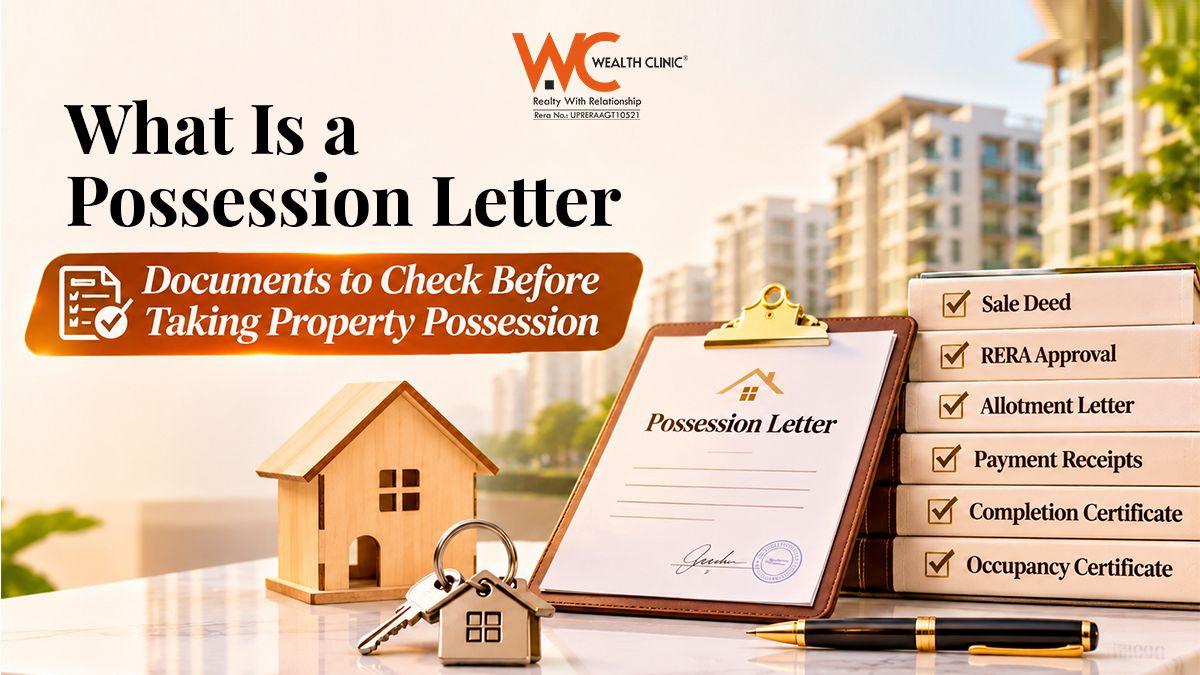
Taking possession of a property is an important milestone for every homebuyer. Whether you have purchased a ready-to-move-in apartment, an under-construction flat or an independent house, receiving the keys does not automatically mean that every legal and documentation requirement has been completed.
One of the important documents involved in this process is the possession letter. It records that the builder or seller has handed over possession of the property to the buyer, generally in accordance with the terms of the sale agreement.
However, before signing a possession letter or accepting the keys, buyers should verify essential documents such as the Occupancy Certificate (OC), Completion Certificate (CC), payment receipts, approved building plans and the final demand statement.
This guide explains what a possession letter means, why it matters, which documents you should check before taking possession and what precautions can help protect your interests.
Joint Property Ownership in India: Rights, Rules & Important Documents
What Is a Possession Letter?
A possession letter is a document issued by a builder, developer or seller confirming that possession of a property has been offered or handed over to the buyer.
It generally mentions important details such as:
- Buyer's name and property details
- Project name and address
- Flat, unit, plot or house number
- Date of possession
- Total area or unit configuration
- Outstanding payments, if any
- Confirmation of handover
- Signatures of the authorised representative and buyer
The possession letter acts as a written record of the handover. It can help establish when the buyer was offered or took possession, depending on its wording and the circumstances.
Important: A possession letter is not a substitute for a registered sale deed or conveyance deed. It also does not independently establish that the building has all the required statutory approvals.
Why Is a Possession Letter Important?
A possession letter is useful because it creates a documented record of the property's handover. It can help buyers and sellers avoid confusion about possession dates and handover responsibilities.
Here are some key reasons why it matters:
1. Written Proof of Possession
The letter records the date on which possession was offered or handed over. This can be relevant if a dispute arises regarding delayed possession or the fulfilment of contractual obligations.
2. Helps Complete the Handover Process
It provides a formal record of the handover of the apartment, house, plot or commercial unit, including the associated details.
3. Useful for Future Documentation
A possession letter may be requested when dealing with maintenance authorities, housing societies, utility providers or other administrative processes. The exact requirements depend on the authority or service provider.
4. Records Important Property Details
The document identifies the specific unit being handed over and can record relevant information about its area, configuration and possession date.
5. Supports Future Dispute Resolution
If there is a disagreement about the date of handover, pending work or possession-related obligations, the letter may serve as supporting evidence along with the agreement, payment records and correspondence.
How to Transfer Property Ownership From One Person to Another?
Documents to Check Before Taking Property Possession
Before accepting possession, do not rely only on the builder's possession letter. Verify the following documents to understand the property's legal status, construction approvals and financial position.
1. Occupancy Certificate (OC)
An Occupancy Certificate is issued by the competent local authority or development authority after verifying that the building meets the applicable requirements for occupation.
Before taking possession, check:
- Whether the OC has been issued for the relevant tower, building or phase.
- Whether your apartment or unit is covered by the certificate.
- Whether the certificate contains any conditions or restrictions.
- Whether the details match the actual project.
For an apartment in a multi-phase project, an OC for one tower does not automatically establish that every other tower is approved for occupation.
2. Completion Certificate (CC)
A Completion Certificate generally confirms that construction has been completed in accordance with the applicable sanctioned plans and building regulations, subject to the relevant authority's requirements.
Check whether:
- The certificate has been issued by the competent authority.
- The approved building plans match the completed construction.
- The relevant building or project phase is covered.
- Any conditions or deviations are mentioned.
The OC and CC serve different purposes, although the terminology and process can vary across states and local authorities.
3. Registered Sale Deed or Conveyance Deed
A registered sale deed or conveyance deed is an important ownership document for a property transaction.
Before taking possession, check:
- Whether the sale deed or conveyance deed has been executed and registered, where required.
- Whether the buyer's name is correctly mentioned.
- Whether the property description, unit number and area are accurate.
- Whether the agreed consideration and payment details are correctly recorded.
- Whether any mortgage, charge or other restriction needs to be addressed.
In some builder transactions, registration and physical possession may happen at different stages. Understand the contractual and legal requirements applicable to your transaction.
4. Builder-Buyer Agreement or Agreement for Sale
The agreement for sale records the terms and conditions agreed upon between the buyer and promoter.
Review the following details:
- Agreed possession date and any contractual grace period.
- Property area and configuration.
- Payment schedule and outstanding amounts.
- Specifications, fittings and fixtures.
- Common areas and facilities.
- Delay compensation and other remedies.
- Maintenance charges and handover conditions.
Compare the actual property being handed over with the commitments in the agreement.
Under Section 13 of the Real Estate (Regulation and Development) Act, 2016, a promoter cannot accept more than 10% of the cost of an apartment, plot or building as an advance or application fee without first entering into a written agreement for sale and registering it as required under the law.
5. Final Payment Receipt and No-Dues Certificate
Before accepting possession, verify your complete payment history.
Ask the builder for:
- Final demand statement.
- Receipts for all payments made.
- Details of any outstanding amount.
- Confirmation of additional charges.
- No-dues certificate or written confirmation of cleared dues, where applicable.
Check whether charges such as maintenance deposits, electricity connection charges, parking charges and other contractual payments have been correctly calculated.
Do not make unexplained payments without asking for a written breakdown.
6. Approved Building Plan
The sanctioned building plan shows the layout and construction details approved by the competent authority.
Compare the approved plan with the actual property and check:
- Flat or unit layout.
- Floor and tower details.
- Common areas and access routes.
- Parking arrangements.
- Any changes made during construction.
Unauthorised construction or deviations may create legal and practical complications. If you notice a significant difference, seek clarification and professional advice before signing the handover documents.
7. RERA Project Details and Completion Status
For projects covered by RERA, buyers should verify the project's registration and current status on the relevant state's RERA portal.
Check:
- RERA registration number.
- Registered project name and promoter details.
- Approved project completion timeline.
- Revised completion dates, if any.
- Project updates and completion status.
- Orders or complaints, if relevant.
For properties in Uttar Pradesh, buyers can check project information through the UP RERA website.
A project's RERA registration does not replace the need to verify its occupancy and other applicable approvals.
8. Property Tax and Utility Dues
Check whether any property-related dues are pending before the handover.
Depending on the property and local rules, these may include:
- Property tax.
- Electricity bills.
- Water bills.
- Gas connection charges.
- Maintenance charges.
- Other local authority dues.
Ask for the latest paid receipts or written confirmation of the outstanding amounts and the party responsible for clearing them.
9. Parking Allotment Letter
If the builder has promised a parking space, verify the parking arrangement and supporting documents.
Check:
- Whether the parking facility is mentioned in the agreement.
- Whether the allotted space matches the promised arrangement.
- Whether the parking number and location are recorded.
- Whether the arrangement complies with applicable laws and project approvals.
Do not assume that every parking space described as a saleable unit is legally transferable. The treatment of parking areas depends on applicable law and the nature of the facility.
10. Possession Letter and Handover Documents
Finally, carefully review the possession letter itself.
Make sure it includes:
- Correct buyer details.
- Correct project and unit information.
- Possession date.
- Property area and configuration.
- Details of keys and access cards handed over.
- List of pending work, if any.
- Meter readings, where applicable.
- Signatures of authorised representatives.
Keep a signed copy of the possession letter and all supporting handover documents.
Physical Inspection Checklist Before Accepting Possession
Document verification is important, but buyers should also inspect the property before signing the final handover documents.
Use this checklist during the site visit:
Take photographs and videos of any defects before signing the possession documents.
If there are incomplete works or defects, prepare a written snag list and ask the builder to acknowledge it with a proposed rectification timeline.
Possession Letter vs Occupancy Certificate vs Sale Deed
These three documents serve different purposes. Buyers should not treat them as interchangeable.
Remember: A possession letter records possession, an OC relates to permission for occupation, and a registered sale deed records the transfer of ownership. Each has a separate role in the property transaction.
What Should You Do If the Builder Does Not Provide a Possession Letter?
If the builder has handed over the keys but has not provided a possession letter, request the document in writing.
Follow these steps:
- Send a written request: Email the builder or authorised representative asking for the possession letter and handover records.
- Check the agreement: Review the possession and handover clauses in your Agreement for Sale.
- Verify statutory approvals: Ask for the applicable OC, CC and other required approvals.
- Keep payment records: Preserve receipts, demand letters and bank transaction details.
- Document the handover: Maintain photographs, videos, emails and records of the date you received the keys.
- Seek legal advice: If the builder refuses to provide documents or the possession is disputed, consult a property lawyer.
For projects covered by RERA, a buyer may approach the relevant Real Estate Regulatory Authority if the promoter has failed to fulfil applicable legal or contractual obligations. The available relief depends on the facts and applicable provisions.
What If the Builder Asks You to Take Possession Without an Occupancy Certificate?
Do not treat the possession letter or key handover as proof that the property is legally ready for occupation.
First, ask the builder for the applicable occupancy approval and verify it with the competent authority. Check whether the certificate covers your specific tower, building or phase.
If the builder is unable to provide the required approval, request a written explanation and avoid signing documents that incorrectly confirm that all statutory requirements have been fulfilled.
The legal position and available remedies depend on the project's approvals, applicable local rules, agreement terms and facts. Consider taking advice from a qualified property lawyer before accepting possession.
Common Mistakes to Avoid Before Taking Property Possession
Many buyers focus on receiving the keys and overlook important documentation and inspection steps.
Avoid these common mistakes:
- Accepting possession without checking the applicable OC.
- Assuming a possession letter proves ownership.
- Not comparing the property with the approved plan.
- Ignoring pending maintenance or utility dues.
- Signing a no-claim or full-and-final settlement declaration without understanding its effect.
- Accepting incomplete construction without recording defects.
- Failing to collect payment receipts and handover documents.
- Not checking parking and common-area arrangements.
- Ignoring discrepancies in the flat number, area or buyer details.
A careful review before possession can help reduce disputes and unexpected expenses later.
Final Checklist: Documents to Collect at the Time of Possession
Before completing the handover, keep copies of the following documents, as applicable to your transaction:
- Possession letter.
- Registered sale deed or conveyance deed, where executed.
- Occupancy Certificate (OC).
- Completion Certificate (CC), where applicable.
- Builder-Buyer Agreement or Agreement for Sale.
- Final demand statement.
- Payment receipts and no-dues confirmation.
- Approved building plan or relevant sanctioned plan details.
- Parking allotment details, if applicable.
- Maintenance and utility handover details.
- Electricity and water meter readings.
- Keys, access cards and security details.
- Property inspection and snag list.
- Applicable warranty and equipment manuals.
Keep digital and physical copies in a secure place for future reference.
Conclusion
Taking possession of a property involves more than collecting the keys. Buyers should carefully verify the possession letter, Occupancy Certificate, Completion Certificate, registered sale deed, payment records and other relevant approvals before completing the handover.
A proper physical inspection is equally important. Record defects, pending work and outstanding payments in writing, and retain copies of every document signed during the process.
A well-documented possession process helps buyers protect their interests and reduces the risk of future property-related disputes.
Before accepting possession, consider getting the documents reviewed by a qualified property lawyer, especially when the project has pending approvals, title concerns or unresolved contractual issues.
Frequently Asked Questions

Disclaimer
Wealth Clinic is a real estate consulting and marketing company offering property advisory services to homebuyers and investors. Project details, pricing, layouts, specifications, and availability are provided by respective developers or publicly available sources and may change without notice. Wealth Clinic does not own or develop the listed projects and acts solely as a consulting partner. All bookings and agreements are between the buyer and the respective developer. Buyers are advised to verify project details, RERA registration, pricing, approvals, and legal documents with the developer before making any purchase or investment decision.
