
 Facebook
 LinkedIn
 WhatsApp
 X
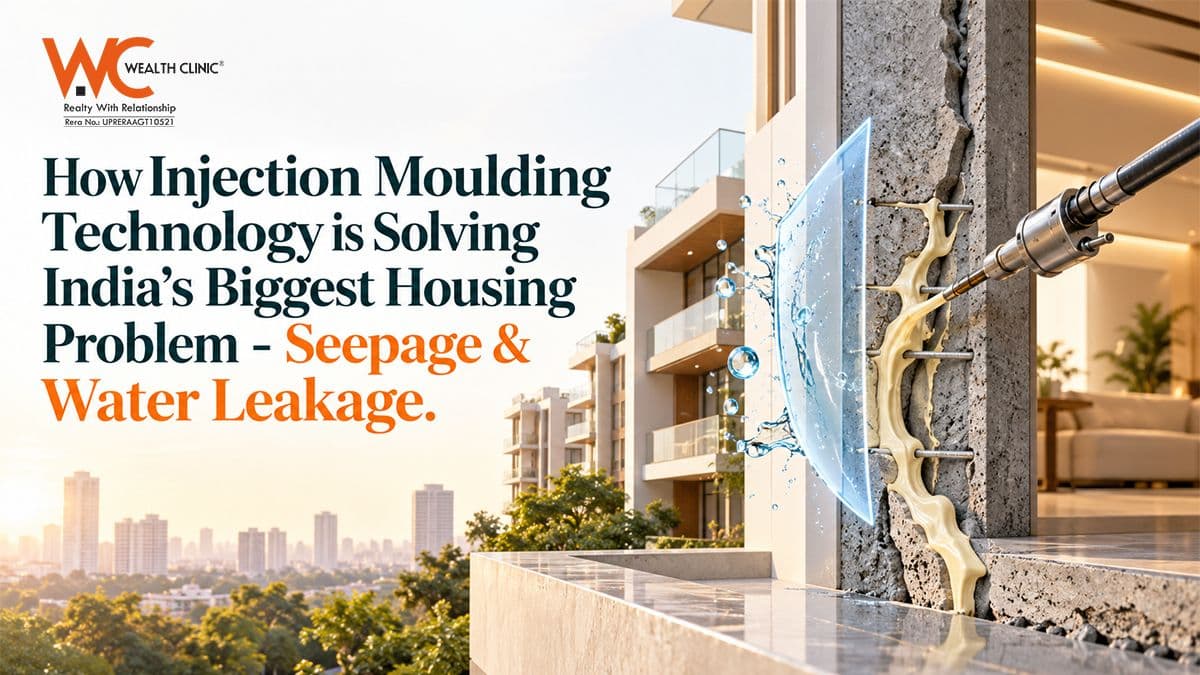
A damp patch on the wall may look like a small maintenance issue. But anyone who has dealt with seepage knows how quickly it can become a bigger headache.
Peeling paint, damp walls, mould, a musty smell and water dripping through a basement or bathroom are common problems in Indian homes and housing societies, particularly during and after the monsoon.
The difficult part is that simply repainting the affected wall rarely solves the actual problem. If water is finding its way through a crack, construction joint or void inside the structure, the source needs to be addressed.
This is where injection grouting technology is becoming an important waterproofing and repair solution.
Explore Properties in Yamuna Expressway | Book a Free Consultation
What is Injection Grouting?
Injection grouting is a technique in which a specialised material is injected under controlled pressure into cracks, joints, voids or other pathways through which water is entering a building.
Depending on the problem, materials such as polyurethane (PU), epoxy, acrylic or cementitious grouts may be used.
The material travels into the affected area and seals the pathway, helping stop water from entering the structure. Injection waterproofing systems are commonly used for existing leaks as well as certain preventive applications.
In simple words, instead of only covering the wet patch from the outside, the treatment attempts to reach the route through which the water is actually travelling.
Explore Properties in Yamuna Expressway | Book a Free Consultation
Why is Seepage Such a Common Problem in Indian Homes?
There isn't one reason behind every leakage. Water can enter a building through:
- Cracks in concrete
- Construction joints
- Expansion joints
- Poorly sealed pipe penetrations
- Basement walls
- Terrace slabs
- Bathrooms
- Water tanks
- Defective or honeycombed concrete
- Poor drainage or waterproofing
In basements, for example, water pressure from surrounding soil can push moisture through cracks and joints.
This is why identifying the source of the leakage is important before selecting a waterproofing treatment.
How Does Injection Grouting Stop Water Leakage?
The process is relatively straightforward, although it should be carried out by trained professionals.
Step 1: Identify the Leakage
The affected area is inspected to understand where the water is entering and whether the issue is related to a crack, joint, void or another pathway.
Step 2: Drill Injection Points
Small holes are drilled around the affected crack or joint at suitable intervals.
Step 3: Install Packers
Injection packers or ports are fixed into these holes. They provide a controlled path for the grout to enter the structure.
Step 4: Inject the Grouting Material
The selected resin or grout is pumped through the packers under controlled pressure.
For active water leakage, water-reactive polyurethane systems may be used because they can react with moisture and form a seal. Epoxy injection, on the other hand, is commonly used for suitable structural cracks where bonding and crack repair are required.
Step 5: Seal and Finish the Surface
Once the treatment is complete, the injection points are sealed and the affected surface can be repaired or finished as required.
Where Can Injection Grouting Be Used?
Injection grouting is particularly useful in areas where water is difficult to stop through ordinary surface treatment.
Common applications include:
Basements: Helps address water entering through retaining walls, joints and cracks.
Lift Pits: Can be used to treat water ingress through concrete structures.
Terraces and Roofs: May be considered where leakage is associated with cracks or joints, depending on the underlying cause.
Water Tanks: Suitable injection systems can be used for certain cracks and construction joints.
Bathrooms: Can help address leakage associated with cracks, joints and concealed pathways in appropriate situations.
Podiums and Underground Structures: Injection systems are also used in larger residential and commercial structures.
Injection Grouting vs Traditional Waterproofing
This doesn't mean injection grouting should replace every other waterproofing method.
The right solution depends on where the water is coming from and what is causing the leakage.
In some cases, more than one method may be needed.
For example, a basement with persistent water pressure may require both leak sealing and a broader waterproofing or drainage strategy rather than injection alone.
Why Are Homeowners Looking at Injection Grouting?
One reason is that it can be used to treat leakage without completely dismantling the affected structure in many situations.
For an existing apartment or housing society, breaking tiles, removing large sections of plaster or excavating an entire area can be disruptive and expensive.
Injection treatment can sometimes be carried out through relatively small access points, depending on the location and nature of the problem.
It is already being used in residential and commercial projects for persistent leakage and seepage problems.
Is Injection Grouting a Permanent Solution?
It can provide long-term or permanent sealing when the correct material, application method and underlying cause are properly addressed, but it should not be marketed as a guaranteed solution for every type of leakage. The result depends on factors such as:
- Cause of water ingress
- Type and size of crack
- Movement in the structure
- Moisture conditions
- Correct grout selection
- Injection pressure
- Quality of workmanship
For example, a moving structural joint requires a different approach from a static concrete crack.
This is why simply asking for “the cheapest injection treatment” isn't always the best approach.
What Should Homeowners Check Before Choosing a Contractor?
Before starting any waterproofing work, ask:
- What is causing the leakage?
- Which injection material will be used?
- Why has that material been selected?
- Is the crack structural or non-structural?
- Will the treatment address the source or only the visible patch?
- What testing will be done after the work?
- What warranty is provided?
- What happens if leakage returns?
A proper inspection should come before the treatment.
Conclusion
Seepage isn't just an appearance problem. Continued moisture can damage paint, plaster, flooring, furniture and finishes. Persistent water ingress can also contribute to deterioration of building materials over time.
That is why modern waterproofing is moving towards diagnosis and targeted repair rather than simply covering visible damp patches.
Injection grouting is one of the technologies helping property owners and housing societies deal with difficult leakage problems, particularly where the water pathway is inside concrete or masonry.
Frequently Asked Questions

Disclaimer
Wealth Clinic is a real estate consulting and marketing company offering property advisory services to homebuyers and investors. Project details, pricing, layouts, specifications, and availability are provided by respective developers or publicly available sources and may change without notice. Wealth Clinic does not own or develop the listed projects and acts solely as a consulting partner. All bookings and agreements are between the buyer and the respective developer. Buyers are advised to verify project details, RERA registration, pricing, approvals, and legal documents with the developer before making any purchase or investment decision.