
 Facebook
 LinkedIn
 WhatsApp
 X
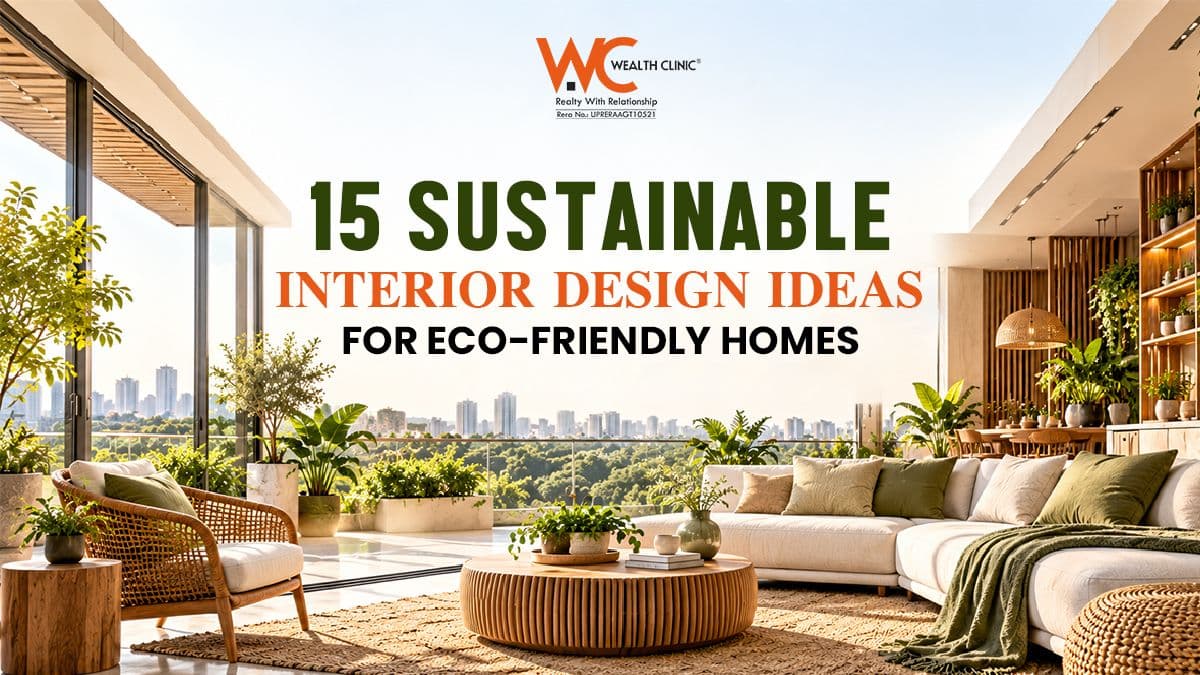
Sustainable interior design is about creating a comfortable, stylish home while reducing waste, conserving energy and choosing materials responsibly. From natural materials to energy-efficient lighting, small design decisions can make your home more environmentally friendly.
Whether you live in a 1 BHK flat, a 2 BHK apartment or an independent house, these sustainable interior design ideas can help you create a healthier and more efficient living space without compromising on style.
Explore Properties in Yamuna Expressway | Book a Free Consultation
Choose Eco
Friendly Building Materials
Select materials with a lower environmental impact, such as reclaimed wood, bamboo, cork and responsibly sourced natural stone. These materials can add warmth and character to your interiors.
Before purchasing, check product certifications, durability and the distance materials need to travel. Sustainable choices depend on the complete lifecycle of a product, not just its appearance.
Use Energy
Efficient LED Lighting
LED lights consume less electricity than traditional incandescent bulbs and generally last longer. Replace inefficient bulbs with LEDs to reduce energy use and maintenance.
Combine ambient, task and accent lighting to illuminate your home effectively without installing unnecessary fixtures.
Maximise Natural Light
Natural daylight can reduce the need for artificial lighting during the day. Keep windows unobstructed, use light-coloured curtains and arrange furniture to allow daylight to spread throughout the room.
For new construction or major renovations, consider window placement and shading to balance daylight with heat gain.
Choose Low
VOC Paints
Paints and finishes can release volatile organic compounds (VOCs) into indoor air. Low-VOC or certified low-emission products can help reduce these emissions.
Look for credible product labels and follow the manufacturer's ventilation and application instructions, particularly when painting bedrooms and children's rooms.
Invest in Durable Furniture
Furniture that lasts longer usually needs to be replaced less frequently, helping reduce waste and resource consumption.
Choose sturdy designs, repairable components and timeless styles. Before buying new furniture, consider whether existing pieces can be repaired, refinished or reused.
Reuse and Upcycle Old Furniture
Upcycling gives existing furniture a new purpose instead of sending it to a landfill. An old wooden table can be refinished, a cabinet can be repainted, or unused drawers can become wall storage.
This approach can also lower renovation costs while adding a personal touch to your home.
Use Sustainable Flooring Options
Consider durable flooring materials such as responsibly sourced wood, cork, bamboo or suitable natural stone. Locally available tiles may also be a practical option depending on their manufacturing impact and expected lifespan.
Choose flooring based on durability, maintenance, indoor emissions and suitability for the room.
Add Indoor Plants Thoughtfully
Indoor plants bring natural colour and texture into a home. Place them near suitable light sources and choose varieties that match your care routine and indoor conditions.
Plants can improve the visual appeal of interiors, but they should not be treated as a replacement for proper ventilation or air filtration.
Install Water
Efficient Fixtures
Sustainable interiors also include water conservation. Consider low-flow taps, efficient showerheads and dual-flush toilets where suitable.
These fixtures can reduce water use without requiring major changes to your décor. Check product performance and local plumbing compatibility before installation.
Choose Natural and Recycled Fabrics
Use curtains, rugs, cushions and bedding made from materials such as organic cotton, linen, jute or recycled fibres where practical.
Check the product's durability, care requirements and sourcing claims. Natural materials are not automatically more sustainable in every situation, so consider how long the product will last.
Improve Insulation and Thermal Comfort
Suitable insulation, draught sealing and window shading can help keep indoor temperatures comfortable and reduce heating or cooling demand.
In Indian homes, external shading, ventilated spaces and appropriately designed curtains can help manage heat. The best solution depends on your climate, building orientation and existing construction.
Choose Multifunctional Furniture
Multifunctional furniture helps make better use of available space and can reduce the need to buy multiple pieces. Consider storage beds, extendable dining tables, sofa beds and modular shelving.
Choose furniture that genuinely meets your needs and is built to withstand regular use.
Create a Waste
Sorting Station
Set aside space in the kitchen or utility area for separating wet waste, dry recyclables and other household waste according to local collection rules.
A compact, well-organised sorting station makes responsible disposal easier and helps keep the home tidy.
Buy Locally Made Products
Locally made furniture, décor and textiles can support nearby craftspeople and may reduce transport-related emissions. Indian homes can incorporate locally crafted wooden furniture, pottery, handloom fabrics and traditional woven accessories.
Ask about material sourcing, manufacturing practices and durability rather than assuming that every locally made product has a lower environmental impact.
Consider Smart Energy Controls
Smart thermostats where applicable, programmable lighting, occupancy sensors and energy-monitoring devices can help manage electricity use.
For example, motion sensors can switch off lights in low-use areas, while timers can control selected lighting schedules. Choose systems compatible with your existing electrical setup and use automation where it provides a real benefit.
Benefits of Sustainable Interior Design
Sustainable interior design offers several potential advantages:
- Lower energy consumption: Efficient lighting and improved thermal comfort can reduce electricity demand.
- Less waste: Reusing furniture and selecting durable products reduces frequent replacement.
- Better resource management: Water-efficient fixtures and responsible material choices can conserve resources.
- Improved indoor comfort: Daylight, ventilation and low-emission materials can support a more comfortable home.
- Long-term value: Durable furniture and efficient fixtures may reduce maintenance and operating costs over time.
Actual benefits depend on the products selected, how they are used and the home's existing condition.
How to Make Your Home More Sustainable on a Budget
You do not need to renovate your entire home to adopt sustainable interior design. Start with these affordable changes:
- Replace frequently used bulbs with energy-efficient LEDs.
- Repair or repaint existing furniture instead of replacing it.
- Use daylight effectively by keeping windows clear.
- Install water-efficient tap aerators where compatible.
- Choose durable accessories and avoid unnecessary purchases.
- Separate household waste for appropriate disposal.
- Use curtains and shading to improve thermal comfort.
Start with changes that are easy to maintain and deliver practical benefits for your household.
Conclusion
Sustainable interior design combines thoughtful planning with practical, environmentally responsible choices. From energy-efficient lighting and durable furniture to water-saving fixtures and reclaimed materials, even small changes can make a difference.
Start with your home's most important needs, choose products carefully and focus on solutions that last. A sustainable home can be comfortable, attractive and functional while using resources more responsibly.
Frequently Asked Questions

Disclaimer
Wealth Clinic is a real estate consulting and marketing company offering property advisory services to homebuyers and investors. Project details, pricing, layouts, specifications, and availability are provided by respective developers or publicly available sources and may change without notice. Wealth Clinic does not own or develop the listed projects and acts solely as a consulting partner. All bookings and agreements are between the buyer and the respective developer. Buyers are advised to verify project details, RERA registration, pricing, approvals, and legal documents with the developer before making any purchase or investment decision.
