
 Facebook
 LinkedIn
 WhatsApp
 X
X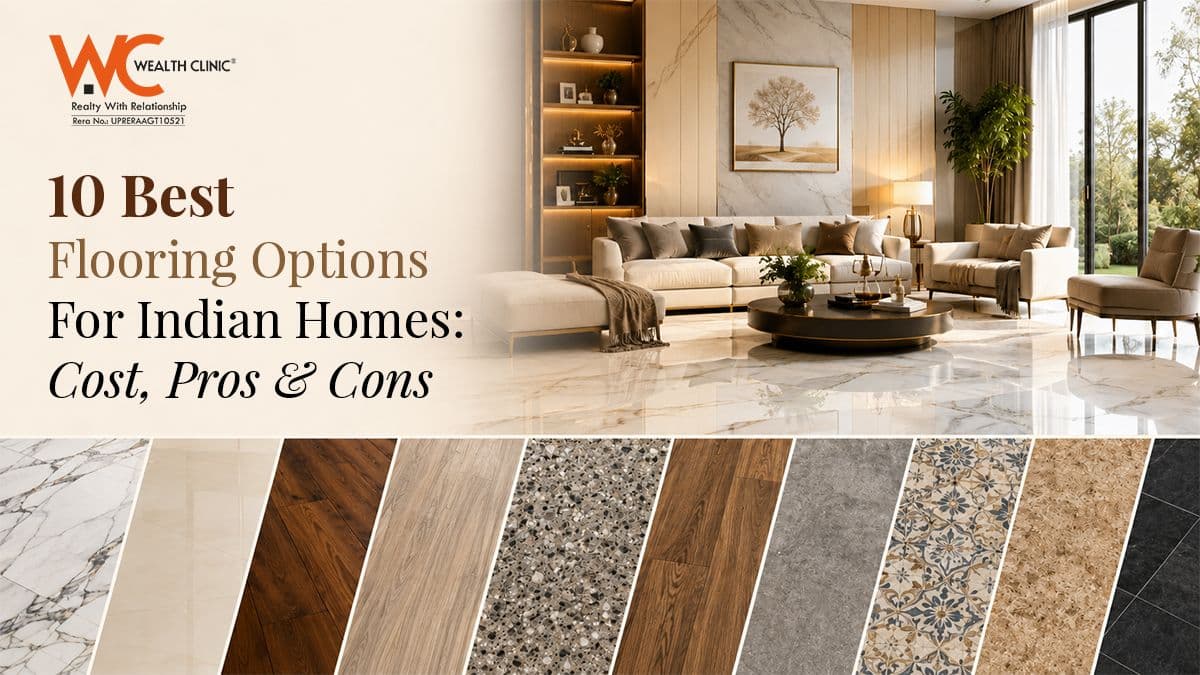
Choosing the right flooring is one of the most important decisions when designing or renovating a home. Flooring affects not only the appearance of your interiors but also maintenance, comfort, durability and the overall cost of your home.
In India, flooring needs to handle dust, heavy foot traffic, summer heat, monsoon moisture and everyday spills. This is why a flooring material that looks attractive may not always be the most practical choice.
From vitrified tiles and marble to granite, wooden flooring, vinyl and Kota stone, homeowners today have plenty of options.
Based on current Indian flooring prices and recent interior-design trends, here are the 10 best flooring options for Indian homes, along with their approximate costs, advantages, disadvantages and ideal applications.
Which Flooring Is Best for Indian Homes?
- Best all-rounder for most homes: Vitrified tiles, durable, water-resistant, and available in almost every finish, at ₹80–₹300/sq ft.
- Best budget option: Ceramic tiles, ₹40–₹100/sq ft, ideal for rental homes and secondary rooms.
- Best luxury look: Italian or Indian marble, ₹250–₹400+/sq ft, but needs regular polishing.
- Best for kitchens and high-traffic zones: Granite, heat-, scratch-, and stain-resistant, ₹150–₹350/sq ft.
- Best for humid/coastal cities: SPC/luxury vinyl, 100% waterproof and termite-proof, ₹70–₹250/sq ft.
- Best warm, premium feel: Engineered wood, ₹150–₹400/sq ft, more humidity-tolerant than solid hardwood.
Now let's break each one down in detail.
Flooring Cost 2026
Vitrified Tiles, The Default Choice for Indian Homes
Vitrified tiles are made by fusing silica, clay, feldspar, and quartz under high pressure and heat, making them dense, water-resistant, and low-porosity. They currently hold roughly half the Indian tile market, and for good reason, they perform reliably across almost every room in a typical Indian home.
Cost: ₹80–₹300/sq ft (material), plus installation of ₹30–₹45/sq ft
Pros:
- Extremely low water absorption (under 3%, and as low as 0.08% for full-body variants)
- Available in matte, glossy, and wood- or marble-look finishes
- Scratch- and stain-resistant, minimal upkeep
- Wide size range, including large-format tiles for a seamless look
Cons:
- Can feel cold underfoot in winter
- Glossy finishes can be slippery, choose matte or anti-skid for bathrooms and balconies
- Large-format tiles need a skilled installer to avoid hollow spots (lippage)
Best for: Living rooms, bedrooms, kitchens, essentially the default floor for most Indian apartments and independent houses.
Ceramic Tiles, The Budget
Friendly Workhorse
Ceramic tiles are the go-to cheap flooring option in India, especially for rental properties, secondary bedrooms, and budget-conscious renovations.
Cost: ₹40–₹100/sq ft (material), plus ₹25–₹35/sq ft installation
Pros:
- Most affordable tiled flooring option
- Water-resistant and easy to clean
- Huge design variety, including patterned and textured options
Cons:
- Less durable than vitrified tiles under heavy daily traffic
- Higher porosity means slightly more prone to staining over time
- Not the best long-term choice for a forever home
Best for: Rental homes, guest rooms, low-traffic secondary spaces, and tight-budget renovations.
Marble Flooring, The Luxury Classic
Marble has been used in Indian homes for generations, prized for its natural veining, cooling properties, and timeless, premium appeal, it's often the first flooring homeowners associate with a "rich" look.
Cost: ₹250–₹400+/sq ft, with imported Italian marble crossing ₹500–₹700/sq ft
Pros:
- Naturally cool underfoot, ideal for India's hot summers
- Unique veining means no two floors look identical
- Genuinely increases perceived property value and resale appeal
Cons:
- Requires periodic polishing to retain shine
- Porous surface stains easily from turmeric, oil, and acidic spills if not sealed
- Can develop a yellowish tinge over years in humid climates
- Among the most expensive flooring options
Best for: Living rooms, foyers, and pooja rooms in homes where budget isn't the primary constraint.
Granite Flooring, Built for Heavy Use
Granite is the hardest natural stone commonly used in Indian interiors, and it's chosen more for performance than looks, it's a strength-first decision rather than a luxury-first one.
Cost: ₹150–₹350/sq ft, depending on grade and origin
Pros:
- Exceptionally scratch-, heat-, and stain-resistant
- Ideal for kitchen countertops and floors exposed to hot vessels and spills
- Very low maintenance compared to marble
- Long lifespan, often outlasting the building's first renovation cycle
Cons:
- Less "luxurious" visual appeal than marble; limited light reflection
- Heavier, so structural load should be checked for upper floors
- Colour and pattern options are more limited than tiles
Best for: Kitchens, staircases, and high-traffic zones where durability matters more than a glossy finish.
Kota Stone, The Traditional, Budget
Smart Option
Kota stone is a fine-grained limestone quarried in Rajasthan, long used in Indian courtyards, verandas, and budget construction for its natural strength and cooling effect.
Cost: ₹60–₹150/sq ft
Pros:
- Naturally slip-resistant when honed, making it safe for wet areas
- Cooling underfoot, well suited to hot Indian climates
- Budget-friendly compared to marble or granite
- Ages well with a classic, earthy look
Cons:
- Limited colour range (mostly green, grey, brown, blue-grey)
- Needs sealing to prevent staining
- Considered less "premium" for formal living spaces today
Best for: Balconies, courtyards, terraces, and budget-conscious independent homes.
Engineered Wood Flooring, Wood Without the Humidity Risk
Engineered wood consists of a real wood veneer layer bonded over a plywood or HDF base, giving genuine wood aesthetics with far better dimensional stability than solid hardwood, a real consideration in India's monsoon and coastal humidity.
Cost: ₹150–₹400/sq ft (mid-range, all-in)
Pros:
- Authentic wood look and warmth underfoot
- Handles humidity and temperature swings better than solid wood
- Easier and faster to install than solid hardwood
- 25+ year lifespan when maintained properly
Cons:
- Still costlier than tiles or laminate
- Not recommended for bathrooms, kitchens, or balconies
- Can be damaged by prolonged water exposure or flooding
Best for: Bedrooms and living rooms, especially in coastal or high-humidity cities.
Laminate Wood Flooring, Wood Look on a Tile Budget
Laminate flooring uses a high-resolution wood-print layer over a dense fibreboard core, topped with a protective wear layer, giving a wood-like look at a fraction of engineered or solid wood cost.
Cost: ₹70–₹180/sq ft, including basic installation
Pros:
- Most affordable way to get a wood-look floor
- Quick to install, often as a floating floor over the existing surface
- Scratch-resistant wear layer suitable for moderate foot traffic
Cons:
- Not genuinely waterproof, unsuitable for bathrooms and kitchens
- Can feel and sound less authentic than real wood
- Shorter lifespan (10–15 years) compared to engineered wood
Best for: Bedrooms and dry, air-conditioned rooms on a budget.
SPC / Luxury Vinyl Flooring, The Fast
Growing Waterproof Option
Stone Plastic Composite (SPC) and luxury vinyl tile (LVT) flooring are among the fastest-growing flooring choices in India right now, largely because they solve the one problem wood can't: water. They're waterproof, termite-proof, and can be installed directly over most existing floors.
Cost: ₹70–₹250/sq ft (material), plus roughly ₹40/sq ft installation
Pros:
- Genuinely waterproof, safe even in kitchens and utility areas
- Termite-proof, a real advantage over solid and engineered wood
- Convincingly replicates wood, marble, and stone finishes
- Fast installation with minimal disruption, good for renovations
Cons:
- Can scratch or discolour from rubber contact (avoid rubber furniture pads)
- Perceived as less "premium" than natural materials for resale
- Quality varies significantly by brand and thickness, cheap SPC can dent
Best for: Homes in humid or coastal cities, quick renovations, and bedrooms where waterproofing matters.
Cement / IPS Flooring, The No
Frills Budget Base
Indian Patent Stone (IPS) or plain cement flooring is the most basic, economical flooring option, a smooth, hard-wearing finish made from cement, sand, and aggregate laid directly on the sub-floor.
Cost: ₹20–₹60/sq ft
Pros:
- Lowest-cost flooring option by a wide margin
- Extremely durable for utilitarian spaces
- Can be finished with oxide colours or polished for a semi-industrial look
Cons:
- Prone to hairline cracks over time without proper curing
- Limited aesthetic appeal for formal living spaces
- Cold and hard underfoot; not ideal for bedrooms
Best for: Terraces, godowns, servant quarters, budget builds, and as a sub-base before final flooring.
Terrazzo Flooring, The Modern Comeback
Terrazzo, a composite of marble, quartz, or granite chips set in cement or resin and polished smooth, has made a strong comeback in 2026 Indian interiors for its durability and ability to hide dirt without pattern fatigue.
Cost: ₹60–₹200/sq ft for tile/precast formats; in-situ poured terrazzo costs more in labour
Pros:
- Extremely durable and dirt-hiding, ideal for high-traffic homes
- Eco-friendly, since it often reuses stone waste/chips
- Distinctive, contemporary look without fragile natural stone
Cons:
- Poured (in-situ) terrazzo requires skilled labour and longer installation time
- Can feel cold and hard underfoot, similar to tiles
- Fewer installers are skilled in traditional poured terrazzo techniques
Best for: Modern homes, balconies, and statement floors in contemporary interior designs.
Which Flooring Is Best for Different Rooms?
Flooring and Climate: What Works Where in India
India's flooring choices shouldn't be one-size-fits-all, climate matters as much as budget:
- Coastal and humid regions (Mumbai, Chennai, Kochi, Kolkata): Prioritise SPC vinyl, vitrified tiles, or engineered wood over solid hardwood or untreated natural stone, which are more prone to moisture-related damage.
- Hot, dry regions (Delhi NCR, Rajasthan, Gujarat): Marble, granite, and Kota stone perform well thanks to their natural cooling effect during peak summer.
- Hill and cold climates (Shimla, Dehradun, parts of the Northeast): Engineered or laminate wood adds warmth underfoot during colder months.
- High dust/pollution cities (Delhi NCR): Low-porosity vitrified tiles or sealed granite are easier to keep dust-free than textured natural stone.
A Quick Note on Vastu and Flooring
If you're also planning your interiors around Vastu principles, flooring choice and colour play a role too. Vastu generally recommends:
- Light, neutral flooring tones, white, off-white, beige, or light grey, across most rooms, since dark shades are believed to dull positive energy.
- Natural materials such as marble, stone, and wood are traditionally preferred over synthetic options like vinyl or linoleum.
- Uniform flooring material across the home is considered good for stability; if you do mix materials, keep transitions clean and deliberate rather than fragmented.
- Direction-based tips: lighter shades in the northeast are believed to reflect sunlight and positive energy, while earthier or warmer tones suit the southwest.
Treat these as traditional design preferences to weigh alongside durability and cost, not as a replacement for the practical, climate- and usage-based advice above.
How to Choose the Right Flooring: 5 Practical Questions
- What's the room's water exposure? Kitchens, bathrooms, and balconies need water-resistant, anti-skid materials, not every "premium" material qualifies.
- What's your realistic maintenance bandwidth? Marble looks stunning but demands regular polishing; vitrified tiles and vinyl need far less upkeep.
- What's your city's humidity level? Coastal and monsoon-heavy regions should lean toward vinyl, SPC, or vitrified tiles over solid wood or untreated stone.
- Is this a rental, a forever home, or a resale-focused investment? Budget tiles suit rentals; marble or engineered wood often pay off better for owner-occupied, long-term, or resale-focused homes.
- Have you budgeted for the full installed cost? Always add labour (30–40% extra), adhesive, grout, skirting, and 5–10% wastage to the material rate, not just the per-sq-ft tile price.
Final Thoughts
The best flooring option for your Indian home ultimately comes down to three factors: how the room is used, your city's climate, and how much ongoing maintenance you're willing to commit to. Most Indian homes today land on a sensible blend — large-format vitrified tiles across living areas and bedrooms for value, granite or anti-skid tiles in the kitchen, anti-skid tiles in bathrooms, and a marble or granite statement in the foyer or pooja room.
Before finalising, always get a full installed quote (not just the material rate), buy 5–10% extra tile from the same batch to avoid dye-lot mismatches later, and, where budget allows, see large-format samples in your own room's lighting rather than under showroom spotlights.
Frequently Asked Questions

Disclaimer
Wealth Clinic is a real estate consulting and marketing company offering property advisory services to homebuyers and investors. Project details, pricing, layouts, specifications, and availability are provided by respective developers or publicly available sources and may change without notice. Wealth Clinic does not own or develop the listed projects and acts solely as a consulting partner. All bookings and agreements are between the buyer and the respective developer. Buyers are advised to verify project details, RERA registration, pricing, approvals, and legal documents with the developer before making any purchase or investment decision.