
 Facebook
 LinkedIn
 WhatsApp
 X
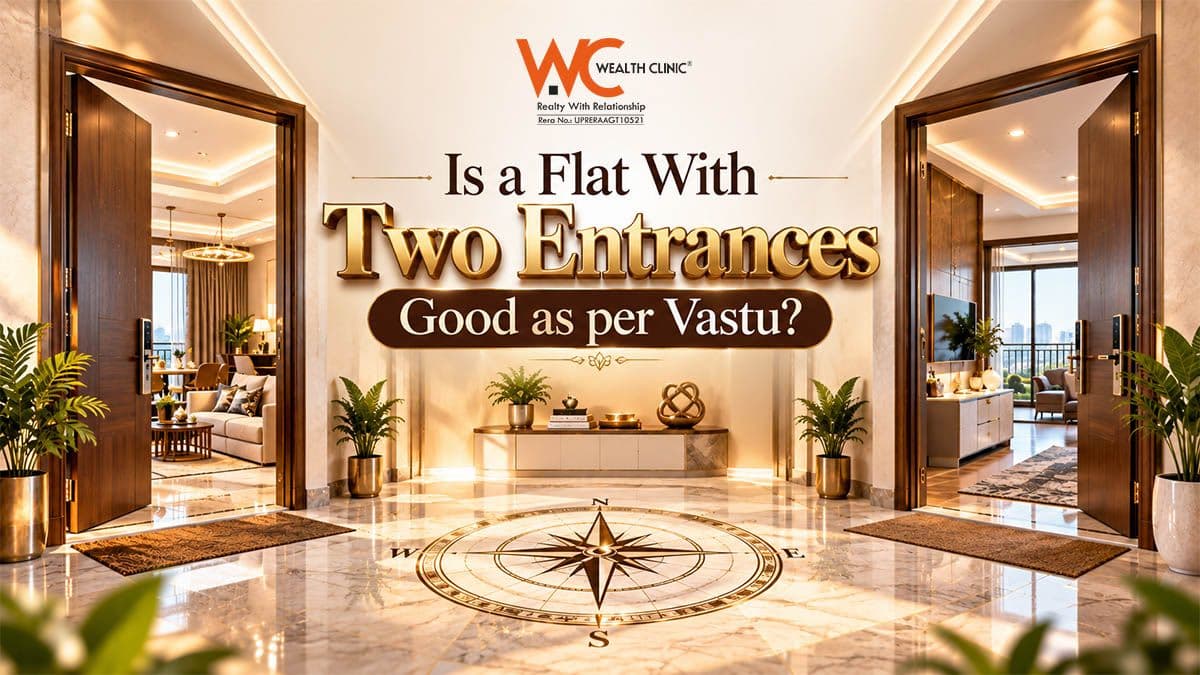
When buying a new flat, most people look at the location, price, floor, layout and amenities. But for homebuyers who follow Vastu Shastra, another question can come up:
“Is a flat with two entrances good as per Vastu?”
Two separate entrances can sometimes be useful in a large apartment for example, one may open into the main living area while another connects to a utility, service or secondary area. But from a Vastu perspective, the answer is not simply “yes” or “no.”
The direction and position of both entrances, which door is actually used as the main entrance, and the overall floor plan are important.
So, if you are considering a flat with two entrances, don't reject it immediately. First understand how the entrances are positioned and used.
Want to invest in a premium property with the right Vastu? Explore top luxury residential projects
Is Having Two Entrances Good or Bad as per Vastu?
Traditionally, two separate entrances are not automatically considered a Vastu defect.
The important point is that the two doors should have a clear purpose. One should generally function as the primary entrance, while the other can serve as a secondary or functional entrance. Vastu guidance also distinguishes between:
- One main door with two shutters/leaves
- Two completely separate entrance doors
These are not the same thing.
A double-leaf main door is simply one entrance with two panels. Two separate doors mean that there are two different points of entry into the flat.
For a homebuyer, this distinction is important.
What Is the Difference Between a Double Door and Two Entrances?
A double door has two panels but remains one main entrance.
For example, a large entrance door may have two equal shutters that open together. This is different from having two separate doors located at different points of the flat.
Traditional Vastu guidance can consider a properly designed double-leaf main entrance acceptable or even preferable for larger homes.
A flat with two separate entrance doors, however, needs to be assessed based on the individual locations and the way the home is used.
Want to invest in a premium property with the right Vastu? Explore top luxury residential projects
Which Door Should Be the Main Entrance?
If a flat has two separate entrances, it is useful to clearly identify one as the primary entrance. The primary door should be the entrance that the family normally uses to enter and leave the home.
The second door can be treated as a secondary entrance—for example, for service access, utility movement or another practical purpose.
From a Vastu perspective, the direction and exact position of the primary entrance deserve particular attention because the entrance is traditionally considered an important part of the home's layout. So, instead of simply asking:
“Does this flat have two doors?”
Ask:
“Which door is the main entrance, where is it located, and how is the second door being used?”
Does the Direction of Both Entrances Matter?
Yes, if you are following Vastu, The direction of the entrance is traditionally assessed along with its exact position on the wall or directional zone. Simply saying that one door is “North-facing” or “East-facing” may not provide the complete picture.
For example, two entrances could be:
- One in the North and one in the South
- One in the East and one in the West
- Both on the same side but at different positions
- Located on different sides of the flat
Each arrangement can have a different floor-plan context.
This is why it is better to look at the actual floor plan and entrance positions rather than applying a general rule to every two-entrance flat.
Is It Bad if Two Entrances Are Directly Opposite Each Other?
Some traditional Vastu practitioners advise caution when two separate doors create a direct straight-line passage through the property, particularly when one entrance directly faces the other.
The traditional reasoning is that the space may not feel contained or settled because there is a direct path from one entrance to the other.
However, this should not be treated as a scientific fact or a guaranteed negative outcome.
For a buyer, there is also a practical question: does the arrangement create an awkward circulation path, reduce privacy or make the living area feel like a passageway?
If the answer is yes, the layout deserves closer attention regardless of Vastu.
What If One Entrance Is for Service Use?
This is fairly common in larger homes and some apartment layouts. A second door may connect to:
- Utility area
- Kitchen/service area
- Staff access
- Back corridor
- Private lift lobby
- Secondary circulation area
In such cases, it is useful to distinguish the main family entrance from the service or secondary entrance.
The primary entrance should remain the main point of everyday entry, while the secondary door can have a clearly defined purpose.
What Should You Check in a Two
Entrance Flat?
If you are buying a flat with two entrances, don't look at the doors separately. Look at the complete layout.
1. Check the Main Entrance Direction
First, confirm the direction of the primary entrance using a reliable compass and the builder's floor plan.
Don't assume the direction based only on the road, balcony or view.
2. Check the Second Entrance
Understand exactly where the second door is located and what area it connects to.
Ask:
- Is it another external entrance?
- Does it open into a corridor?
- Is it a service entrance?
- Does it connect to a utility area?
- Will your family actually use it?
3. Check the Relationship Between the Two Doors
Look at whether the two doors are directly opposite each other or create an unusually long straight passage.
This is relevant both from a traditional Vastu perspective and from a practical floor-plan perspective.
4. Check Privacy
A second entrance can sometimes be useful, but it can also reduce privacy if visitors can enter directly into private areas.
Think about how the entrance affects:
- Living room
- Bedrooms
- Kitchen
- Family areas
- Guest movement
5. Check Natural Light and Ventilation
Two entrances can sometimes improve circulation, but they don't automatically guarantee good ventilation.
Look at the actual windows, balconies and airflow paths.
6. Check the Overall Floor Plan
A flat should not be judged only by its entrances. Also look at:
- Kitchen position
- Master bedroom
- Toilets
- Northeast zone
- Flat shape
- Balcony
- Living room
- Utility area
This gives you a more complete picture.
Is a Two
Entrance Flat Better Than a One
Not necessarily, Having two entrances is not automatically an advantage. A single well-planned entrance can be perfectly practical, while a two-entrance flat can be useful when the second door serves a genuine purpose.
For example, a larger apartment with separate family and service circulation may benefit from an additional entrance.
But if the second entrance simply creates confusion, compromises privacy or makes the layout less efficient, it may not add much value.
The quality of the floor plan matters more than the number of doors alone.
Can a Flat Have Two Main Entrances?
It is better to clearly identify one as the primary entrance rather than treating both doors as equally important. If both doors are used equally every day, and you are particularly concerned about Vastu, it is worth having the specific floor plan reviewed by a qualified Vastu practitioner.
Different Vastu traditions can interpret entrance placement differently, especially when dealing with detailed directional divisions.
For an apartment buyer, this is more useful than following a universal internet rule.
What About Luxury or Large Apartments?
Two entrances are more common in larger apartments because they can provide separate access for different purposes. For example, a large luxury apartment may have:
- Main entrance for residents and guests
- Service entrance near the kitchen
- Separate staff circulation
- Private lift access
In such cases, the second entrance can actually improve the functionality of the home.
From a Vastu perspective, the primary entrance should still be assessed carefully, while the second entrance should be understood in the context of the complete plan.
Should You Reject a Flat Because It Has Two Entrances?
No, not automatically, If you find a flat that has two entrances, first check why the second entrance exists and how it affects the layout. A property decision should also consider:
- Location
- Builder reputation
- Carpet area
- Floor
- Construction quality
- Natural light
- Ventilation
- Price
- Maintenance cost
- RERA and applicable approvals
- Property documentation
- Future resale suitability
If Vastu is important to you, add entrance direction and placement to your checklist—but don't let one factor make you ignore major property fundamentals.
Two
Entrance Flat Vastu Checklist
Before booking a flat with two separate entrances, check:
- Which door is the primary entrance?
- What direction does the main entrance face?
- Where exactly is the entrance positioned?
- What is the purpose of the second entrance?
- Are the two entrances directly opposite each other?
- Does the second door affect privacy?
- Does the floor plan have a clear and comfortable circulation path?
- Where are the kitchen and bedrooms located?
- What is located in the Northeast zone?
- Does the flat receive enough natural light?
- Is there good ventilation?
- Have you checked the approved floor plan and relevant property documents?
Final Takeaway
A flat with two entrances is not automatically good or bad as per Vastu.
The important factors are the direction and placement of the entrances, which door functions as the primary entrance, how the second door is used, and how both entrances fit into the overall floor plan.
A double-leaf main door should also not be confused with two separate entrances.
If you are buying a new flat, check the actual floor plan rather than relying on a simple rule such as “two doors are bad.” And if Vastu is an important part of your decision, consider getting the specific layout assessed rather than applying generic advice.
Most importantly, Vastu is a traditional belief system, not a scientifically established method for predicting health, wealth or success. Use it as a personal or cultural preference while separately evaluating the property's location, legal status, construction quality, price and everyday usability.
Frequently Asked Questions

Disclaimer
Wealth Clinic is a real estate consulting and marketing company offering property advisory services to homebuyers and investors. Project details, pricing, layouts, specifications, and availability are provided by respective developers or publicly available sources and may change without notice. Wealth Clinic does not own or develop the listed projects and acts solely as a consulting partner. All bookings and agreements are between the buyer and the respective developer. Buyers are advised to verify project details, RERA registration, pricing, approvals, and legal documents with the developer before making any purchase or investment decision.