
 Facebook
 LinkedIn
 WhatsApp
 X
X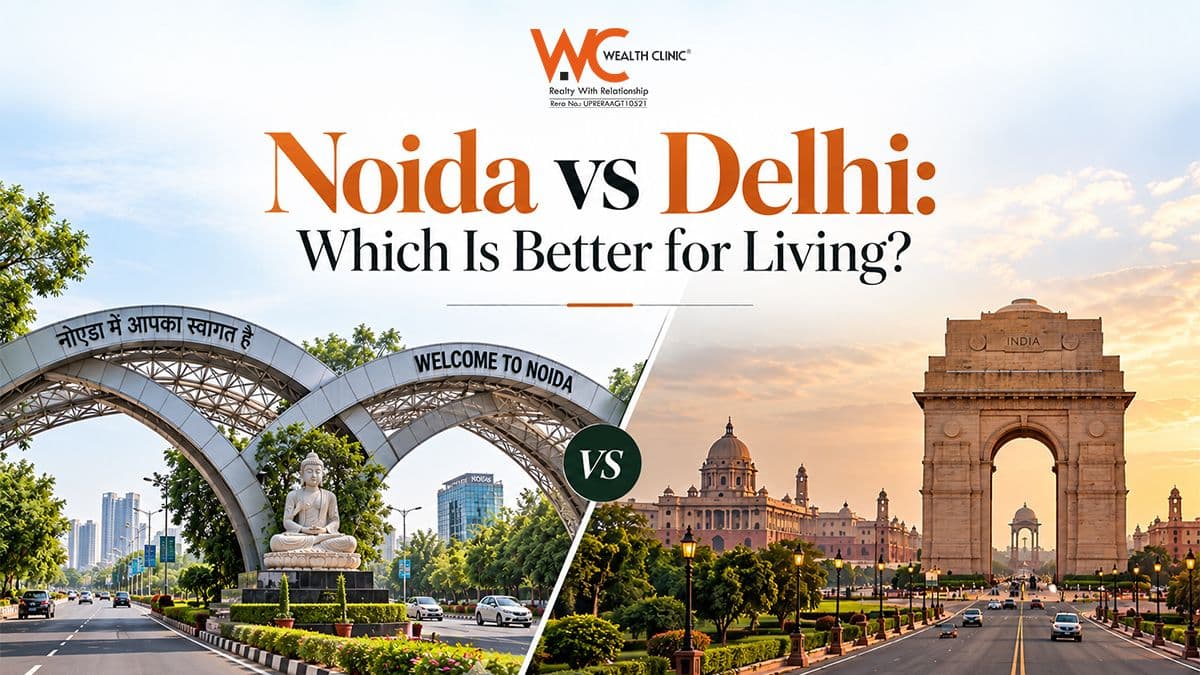
Choosing between Noida and Delhi is a common question for people moving to Delhi-NCR for work, education or family life.
Both offer excellent connectivity, established residential areas, schools, hospitals, shopping centres and employment opportunities. But the overall living experience is different.
Delhi offers a mature urban environment with extensive public transport, established neighbourhoods and access to major government, business and cultural hubs.
Noida offers planned sectors, modern housing societies, growing commercial hubs and relatively newer urban infrastructure.
So, Noida vs Delhi, which is better for living? The answer depends on your budget, workplace, lifestyle and priorities.
Noida vs Delhi: Quick Comparison
Living in Noida
Noida is known for its planned sectors, broad roads and modern residential developments.
The city has developed into an important commercial and employment hub, particularly around areas such as the Noida Expressway and Sector 62.
For residents, one of Noida's major advantages is the combination of residential communities, offices, schools, hospitals, shopping destinations and recreational facilities within a planned urban framework.
Explore Properties in Noida | Book a Free Consultation
Why People Choose Noida
Planned neighbourhoods:
Many sectors have organised layouts, roads, parks and designated residential areas.
Modern housing:
Noida has a wide selection of apartments and gated residential societies, including newer developments.
Employment opportunities:
The city has a strong presence of IT, corporate, media and commercial businesses.
Connectivity:
Metro connectivity and major road corridors connect Noida with Delhi and other parts of NCR.
Contemporary lifestyle:
Malls, restaurants, entertainment centres and commercial hubs provide plenty of options for residents.
Living in Delhi
Delhi is a much older and more established metropolitan city with a wide variety of neighbourhoods.
From central areas and established colonies to residential suburbs, Delhi offers very different living environments across its localities.
The city is particularly known for its extensive public transport network, established social infrastructure, educational institutions, healthcare facilities and cultural attractions.
Why People Choose Delhi
Extensive Metro network:
Delhi Metro connects a large number of residential, commercial and institutional areas.
Established infrastructure:
Many neighbourhoods already have mature markets, schools, hospitals and local services.
Employment diversity:
Delhi has government offices, corporate establishments, businesses, educational institutions and service-sector employment.
Cultural and recreational options:
Residents have access to historical sites, museums, markets, restaurants, parks and entertainment destinations.
Central NCR location:
For people whose work or regular activities are concentrated in Delhi, living within the city can reduce daily travel.
Noida vs Delhi for Families
For families, the choice depends largely on school access, healthcare, housing preferences, commute and lifestyle.
Noida can appeal to families looking for modern gated societies, planned sectors and relatively newer residential developments.
Delhi can suit families who prefer established neighbourhoods with mature local markets, schools, hospitals and community infrastructure.
Before selecting a home, check the actual distance to your children's school, workplace, hospital and daily shopping areas.
Noida vs Delhi for Working Professionals
Your workplace should be one of the first factors to consider.
If your office is in Noida, Greater Noida or along the Noida Expressway, living in Noida can reduce daily commuting.
If your workplace is in Central Delhi, South Delhi, Connaught Place or other Delhi-based business districts, living closer to the office may be more practical.
For professionals who frequently travel across NCR, metro and expressway connectivity should be considered alongside the location of the home.
Noida vs Delhi: Which Is More Affordable?
There is no single answer because both cities have significant variation in property prices and living costs.
In Delhi, housing costs differ substantially between localities. A premium South Delhi neighbourhood and an outer Delhi locality can have very different prices.
Similarly, Noida property prices vary depending on the sector, project, developer, property size and proximity to major roads or commercial hubs.
When comparing affordability, consider the total monthly cost, including:
- Rent or EMI
- Maintenance
- Electricity and utilities
- Transportation
- Parking
- School expenses
- Daily shopping
- Lifestyle expenses
A cheaper house can become more expensive overall if it creates a long and costly daily commute.
Noida vs Delhi for Connectivity
Delhi has an extensive public transport ecosystem, particularly its metro network.
Noida is connected to Delhi through metro corridors and major road links, while the city's location provides access to important NCR routes.
For daily commuters, the best choice depends on where you work and how often you travel.
If you use public transport every day, check the distance between your home and the nearest metro station. If you drive, evaluate peak-hour travel time rather than relying only on normal traffic conditions.
Noida vs Delhi for Lifestyle
The lifestyle experience is quite different.
Delhi offers a highly diverse urban environment with established markets, restaurants, cultural institutions, historical places and neighbourhoods with distinct identities.
Noida offers a more modern planned-city experience, with large residential societies, shopping malls, commercial centres and newer developments.
Your choice may therefore come down to whether you prefer an established metropolitan environment or a newer planned urban setting.
Noida vs Delhi for Property Buyers
If you are planning to buy a home, don't compare only the average property prices of the two cities.
Compare individual locations based on:
- Developer reputation
- RERA registration, where applicable
- Property title and approvals
- Construction quality
- Possession status
- Connectivity
- Maintenance costs
- Nearby schools and hospitals
- Rental demand
- Resale market
- Future development
For Delhi properties, buyers should also carefully verify ownership, title documents, applicable land and development regulations and the property's legal status.
Which Is Better for Students?
Delhi has a large concentration of established educational institutions and student-oriented neighbourhoods.
Noida also has universities, colleges, coaching centres and professional institutions, particularly across Noida and the wider Greater Noida region.
Students should consider college location, accommodation costs, public transport, commute time and everyday expenses before choosing where to live.
Noida vs Delhi: Which Should You Choose?
Noida may suit you if you prefer:
- Planned sectors
- Modern gated societies
- Newer residential developments
- Proximity to Noida's corporate hubs
- Expressway connectivity
- A relatively newer urban environment
Delhi may suit you if you prefer:
- Established neighbourhoods
- Extensive metro connectivity
- Mature local markets and services
- Proximity to Delhi-based offices and institutions
- Diverse cultural and recreational options
Final Takeaway
The Noida vs Delhi decision ultimately depends on your everyday requirements.
If you value planned sectors, modern housing societies and proximity to Noida's commercial hubs, Noida offers a compelling residential environment.
If you prefer established neighbourhoods, extensive public transport and the diverse lifestyle of a mature metropolitan city, Delhi provides a different set of advantages.
Before renting or buying, compare specific localities rather than cities alone. Your workplace, budget, commute, family requirements and preferred lifestyle should guide the final choice.
Frequently Asked Questions

Disclaimer
Wealth Clinic is a real estate consulting and marketing company offering property advisory services to homebuyers and investors. Project details, pricing, layouts, specifications, and availability are provided by respective developers or publicly available sources and may change without notice. Wealth Clinic does not own or develop the listed projects and acts solely as a consulting partner. All bookings and agreements are between the buyer and the respective developer. Buyers are advised to verify project details, RERA registration, pricing, approvals, and legal documents with the developer before making any purchase or investment decision.