
 Facebook
 LinkedIn
 WhatsApp
 X
X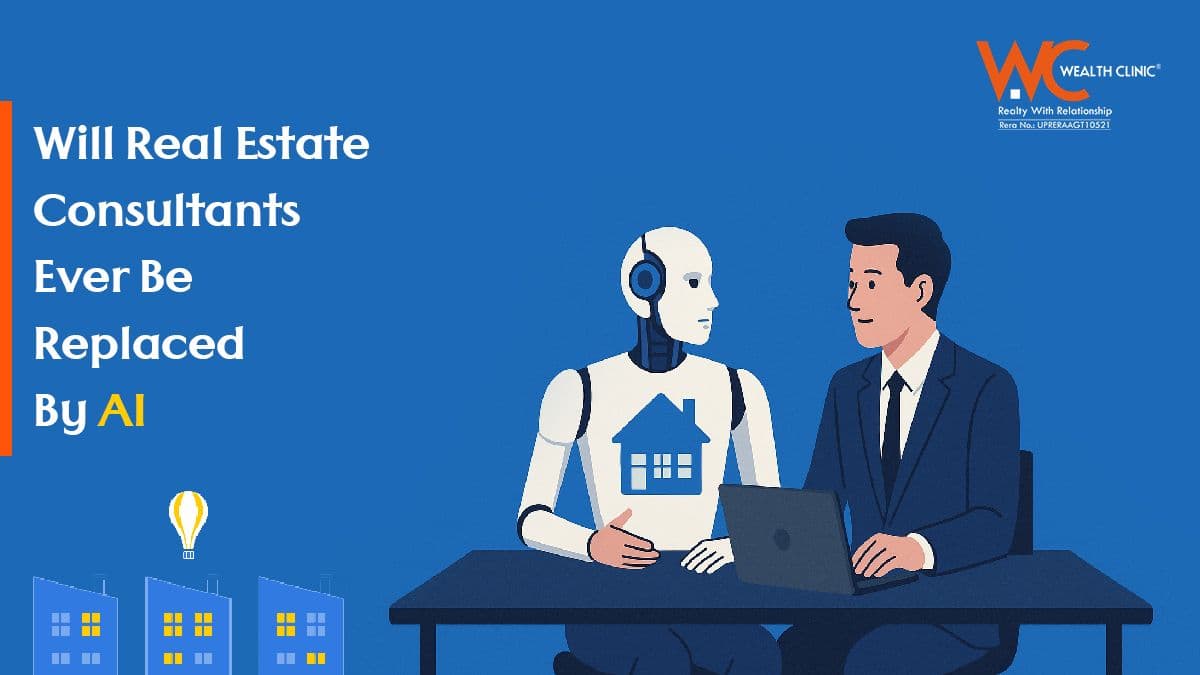
AI is changing the real estate sector, but it will not be able to substitute for a human touch.
Every industry is undergoing rapid changes with the advent of technology, and the real estate industry is no different. AI is optimizing processes in real estate through virtual property tours, predictive analytics, and much more, providing a more efficient and tailored experience to buyers and sellers. This crescendo of innovation vouches for a popular question: Will real estate consultants become an obsolete profession in the near future?
To answer this question, let’s take a closer look: Real estate consultants will remain in demand for the foreseeable future. While AI poses a profound threat to some professions, in this case it will not stand a chance against the empathy, trust, and periodic judgement that real estate professionals excel at. Instead of the long-debated showdown of human versus machine, what we really need to be thinking about is the future of real estate: the collaboration of AI + humans. That is the point in which true transformation and, frankly, magic occurs.
How AI Performs Tasks Within Real Estate Industry
Data is AI’s forte, especially when it comes to big data sets. In a data-driven industry such as real estate where choices must be made, AI is invaluable. Algorithms are capable of examining market trends, assessing property values and even predicting growth in certain neighborhoods. In addition, it can behaviorally analyze and match clients to potential homes.
For purchasers, AI features chatbots that respond to queries in real-time while virtual assistants schedule property viewings. Furthermore, properties of interest are suggested through hyper-personalized algorithms. For sellers and agents, AI helps with dynamic pricing models, automates marketing, and even assists in lead scoring and customer segmentation.
But AI Can’t Read A Room or Shake Your Hand
AI may have many abilities, but lacking a key component of buying or selling properties–human emotional intelligence–is where AI falters.
Emotional intelligence is core to buying or selling real estate properties, as doing either one is accompanied by a lot of sentimental value. A home purchase is seen as an investment that covers one's dreams, aspirations, and a symbol of security. This is where real estate consultants come in.
Building trust and rapport with a client takes to listening to their needs. A seasoned consultant goes beyond showing listings to picking up what clients won’t say out loud to managing family dynamics during nerve-wracking negotiations. AI can notice patterns, but AI can’t understand feelings like a seller’s emotional bond to a home they grew up in during a walk-through.
Algorithms are impressive but they cannot unconditionally replace real empathy or the genuine liaison of real humans, which makes AI inadequate for the tremendously personal field of real estate.
AI as an Assistant, Not a Replacement
The best real estate experts are adopting AI technology instead of resisting it.
Instead of worrying about obsolescence, consultants are finding ways AI will enhance their services. They are employing predictive analytics to provide sharper client investment propositions, using AI tools to transform admin tasks into relationship-building time, and offering more personalized client tech-enabled interactions.
Consider this analogy: AI manages the actions and workflows, while humans are responsible for the rationale.
Clients may require AI-powered tools to help whittle down options, but experts will still be needed to guide them through the decision-making process. Clients may opt to take virtual tours, but during the actual walk-through, clients expect professionals to go beyond rote recitation and proactively scan the environment for potential issues while providing thoughtful, tailored recommendations.
The role of the consultant in an AI-powered world doesn’t diminish; it changes.
The Future is Collaborative
The argument is not humans combatting AI; it’s a partnership of AI and humans. It’s that fusion where the magic happens.
Envision a consultant who leverages artificial intelligence to stay updated with real-time market intelligence, forecasts a client's needs based on historical data, and tailor-makes the property presentation. Picture now that same consultant taking the extra effort to comprehend a client’s strategic long-term objectives, orchestrating intricate negotiations with sensitivity, and offering reassurance through uncertainty.
Frequently Asked Questions

Disclaimer
Wealth Clinic is a real estate consulting and marketing company offering property advisory services to homebuyers and investors. Project details, pricing, layouts, specifications, and availability are provided by respective developers or publicly available sources and may change without notice. Wealth Clinic does not own or develop the listed projects and acts solely as a consulting partner. All bookings and agreements are between the buyer and the respective developer. Buyers are advised to verify project details, RERA registration, pricing, approvals, and legal documents with the developer before making any purchase or investment decision.